
Last updated October 30, 2026
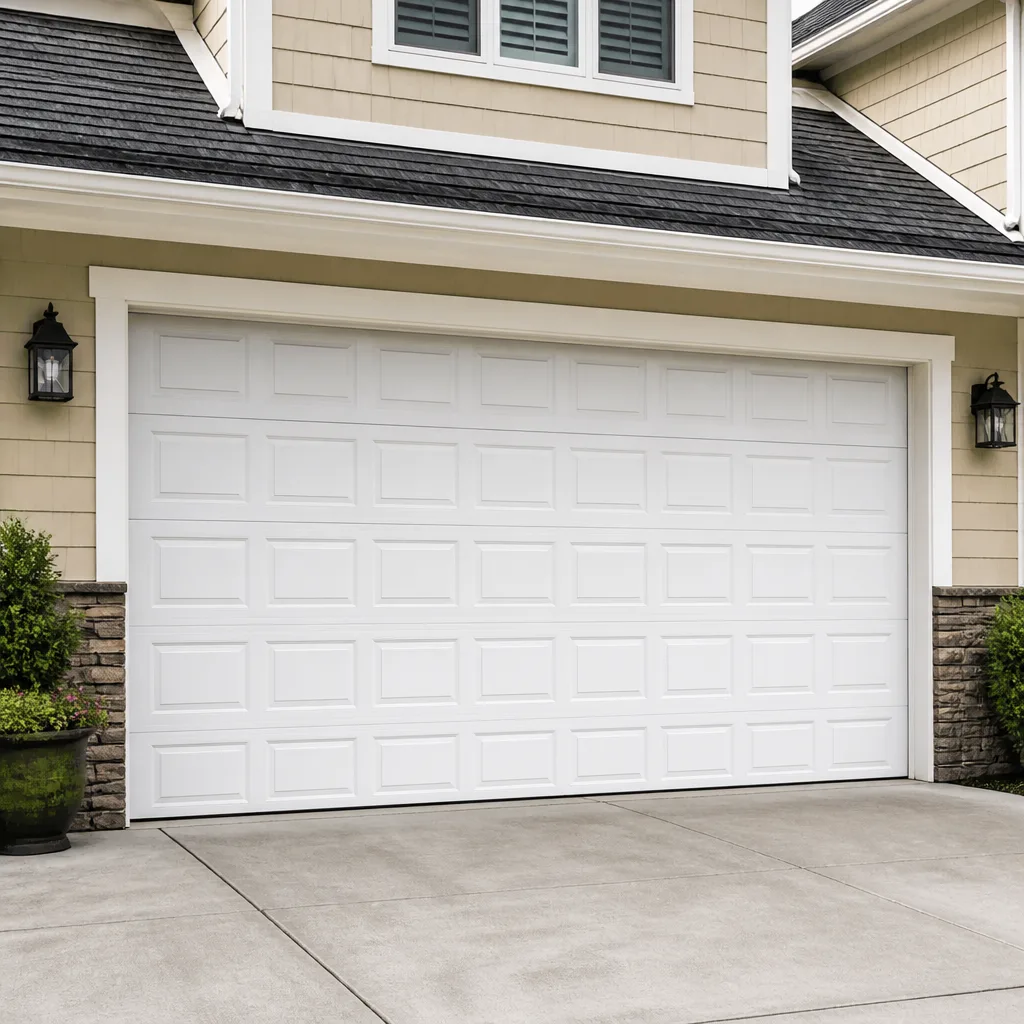 Raised-panel steel
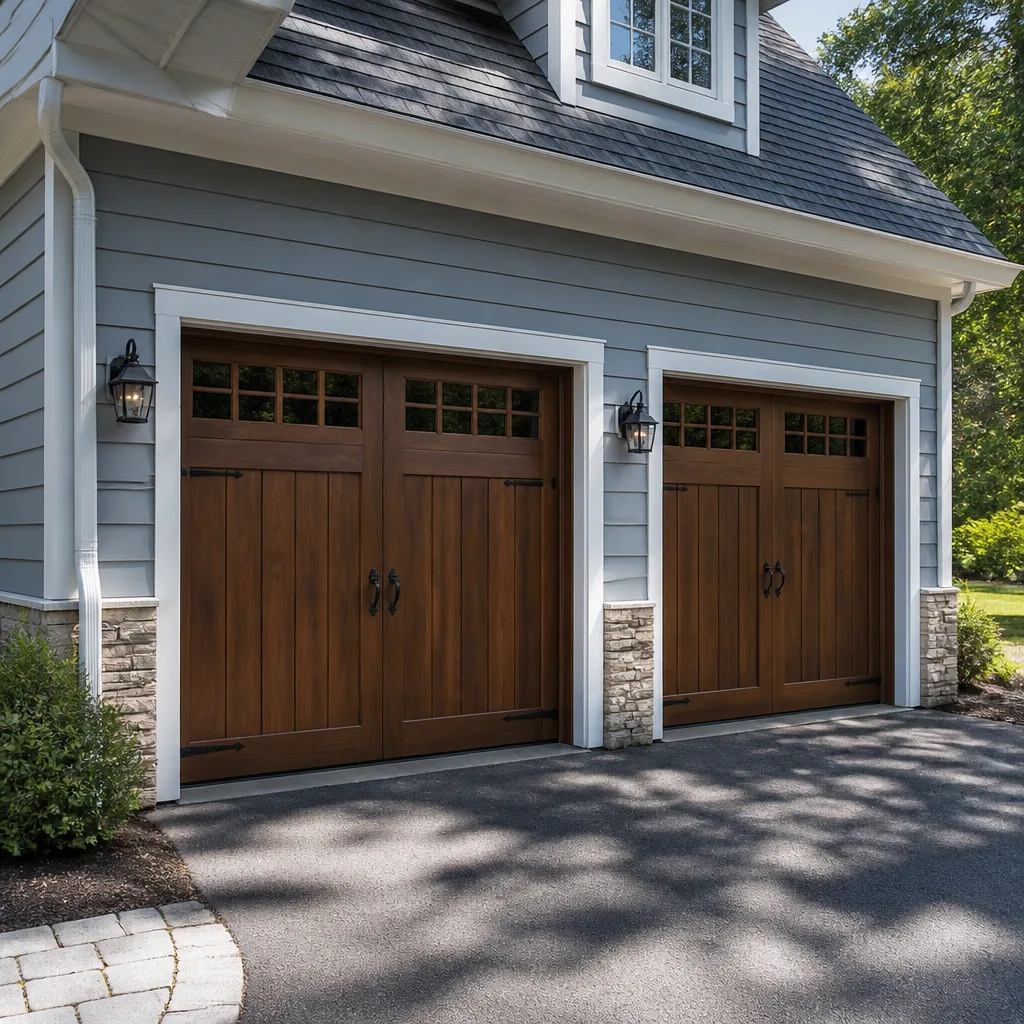 Carriage house
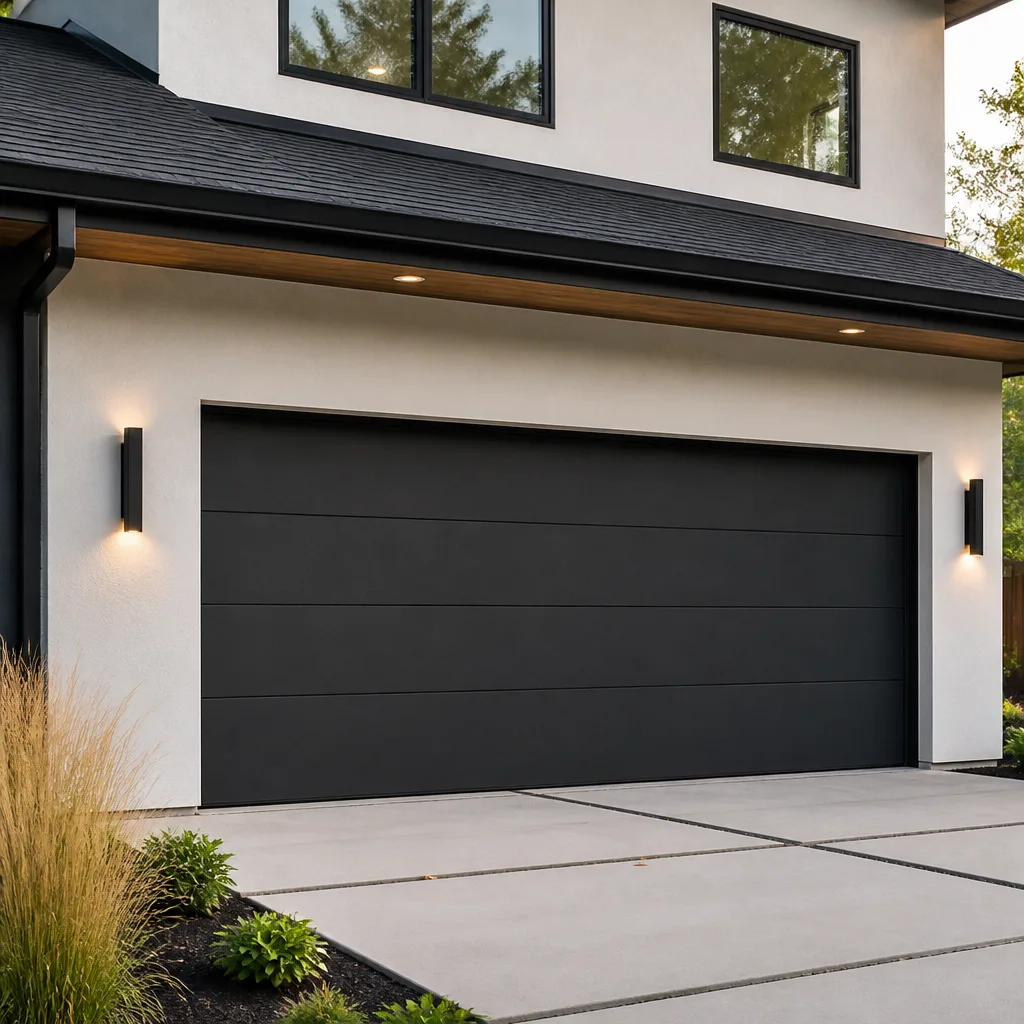 Modern flush
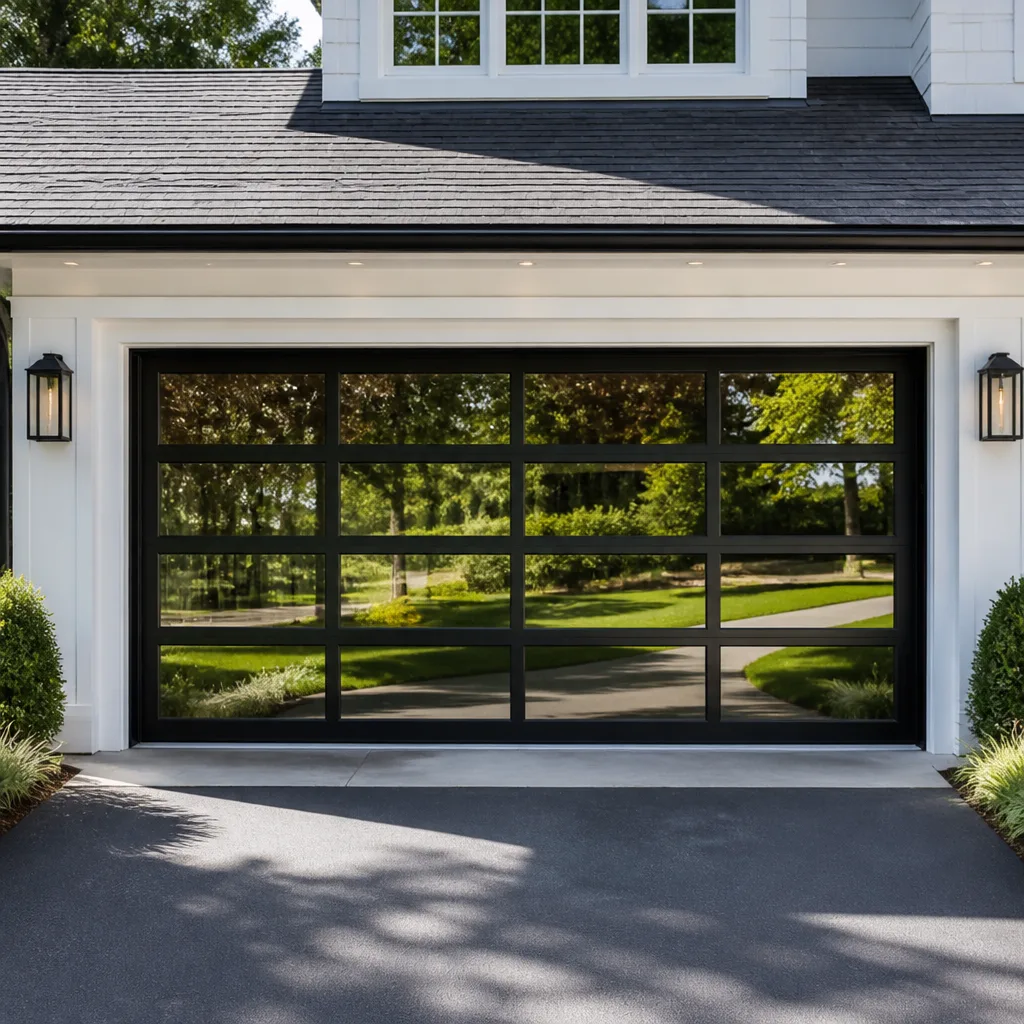 Full-view glass
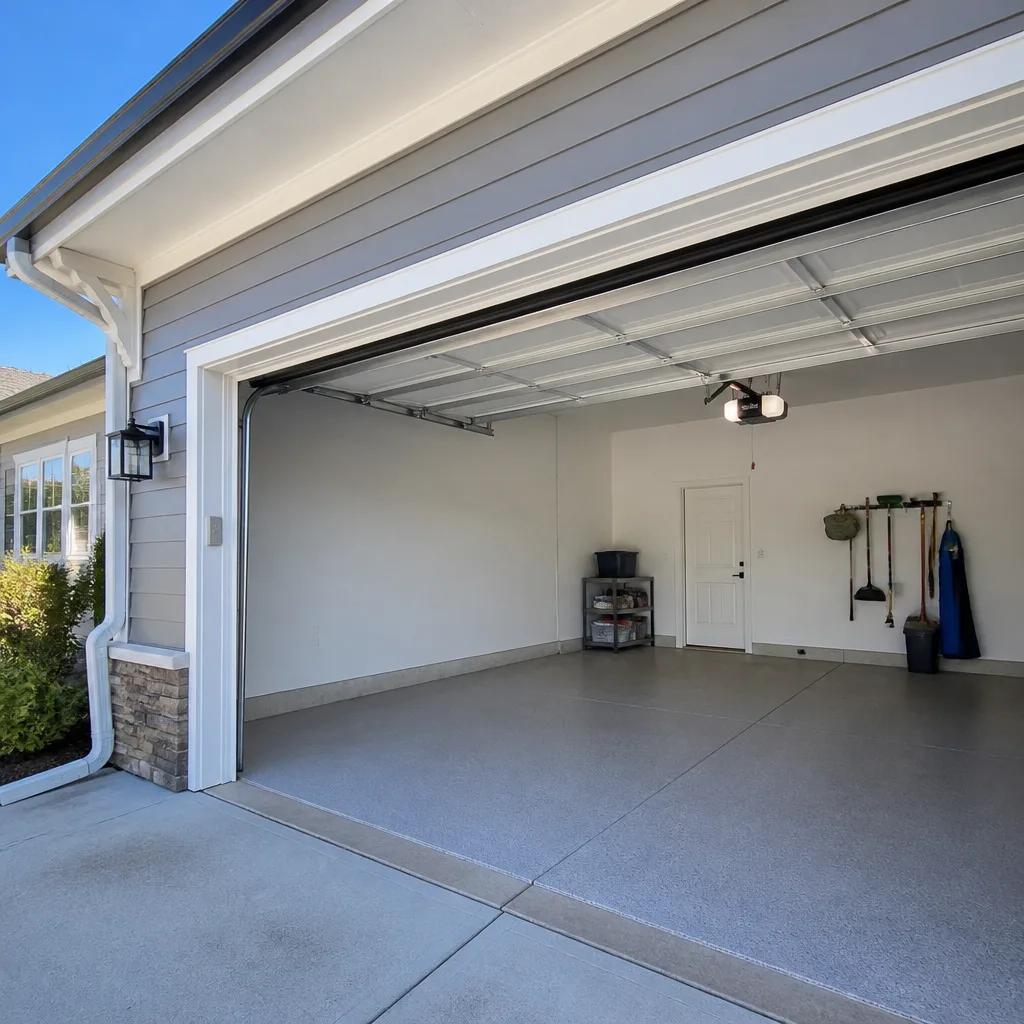 LiftMaster openers
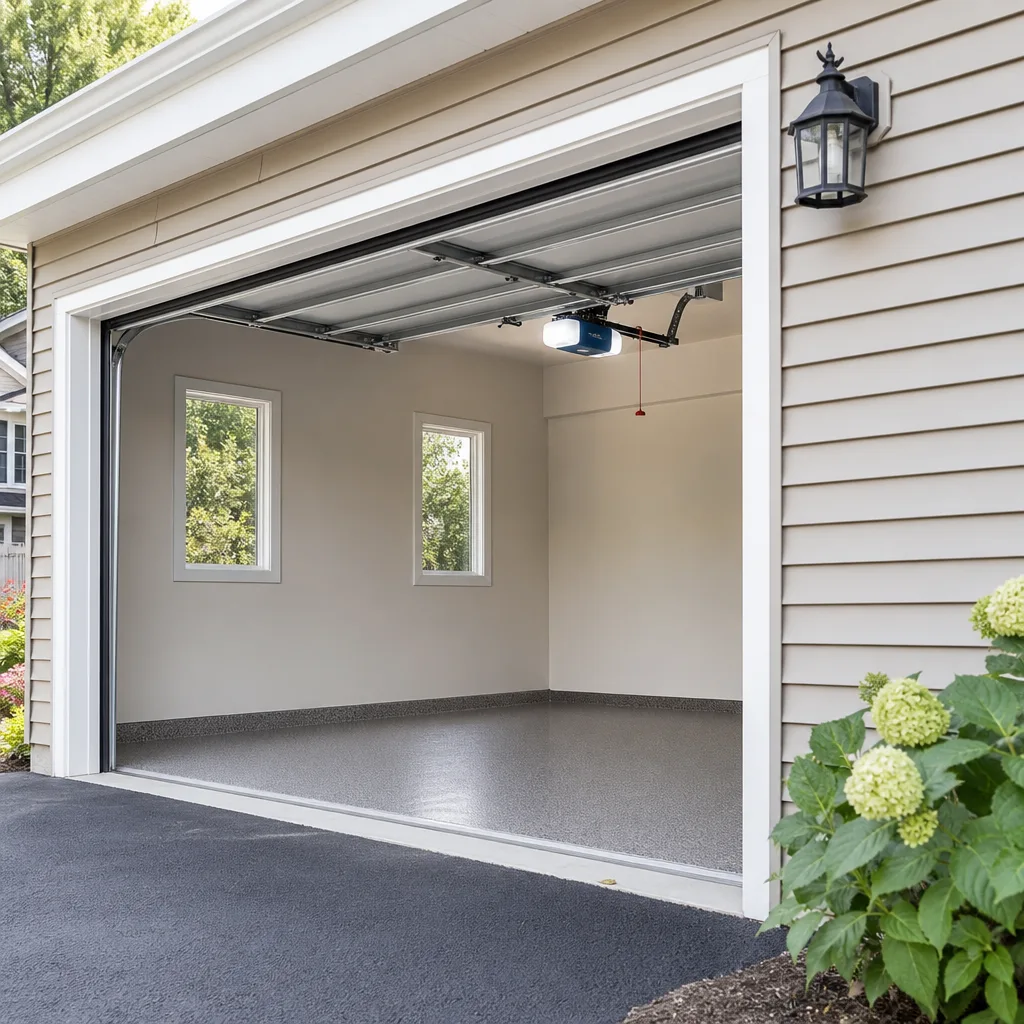 Chamberlain openers
Full 25-point door and opener safety check with every visit - springs, cables, rollers, tracks, and your LiftMaster or Chamberlain opener included
You get a price before we start. It does not change when the truck arrives.
Get your free estimateSeasonal Garage Door Care for Riverside: Year-Round Homeowner’s Guide
Riverside’s “mild” reputation masks a harder truth: your garage door hardware absorbs more UV exposure here in one summer than it would in three years in Seattle, and most maintenance schedules aren’t built for that. Between the July heat that softens rubber seals, the Santa Ana winds that grind dust into your photo-eye sensors, and the winter rains that saturate Riverside’s clay-heavy soil, your door faces a different kind of beating than garage doors in coastal California or the Midwest. This guide structures maintenance around the four stress periods Riverside actually has: peak heat, wind season, the rainy window, and the mild stretch in spring. For a broader look at garage door care in this climate, see our Complete Guide to Garage Door in Riverside. By the end, you’ll know exactly what to check, when to check it, and what’s worth calling a pro about before a $40 seal replacement becomes a $400 bottom bracket repair.
Styles & brands we work with
Quick Answer
Seasonal garage door maintenance in Riverside means checking and servicing different components at four distinct times: summer (heat-related seal warping and opener thermal shutoff, June-September), Santa Ana season (sensor misalignment and track debris, October-December), the rainy window (water infiltration and floor seal damage, January-March), and spring (the only practical window for spring replacement, track lubrication, and repainting, April-May). A homeowner can handle most inspection tasks in 15 minutes per season, but spring replacement, opener repair, and any work involving high-tension cables should be done by a trained professional. For detailed guidance on what you can fix yourself and when to call help, read The Complete Garage Door Repair Guide for Riverside Homeowners. Most Riverside homeowners who follow this schedule avoid the two most common mid-season failures: a door that won’t stay closed during a January rainstorm and a snapped spring on a 105-degree July afternoon.
Table of Contents
- Riverside’s Climate Reality: What Your Garage Door Actually Faces
- Summer (June-September): Heat, UV, and Thermal Shutoff
- Santa Ana Season (October-December): Dust, Static, and Sensor Failures
- Rainy Season (January-March): Clay Soil, Water Infiltration, and Floor Seal Damage
- Spring (April-May): The Only Practical Window for Major Work
- The Riverside Seasonal Task Card: What to Check and When
- Common Mistakes to Avoid
- When to Call a Professional
- Frequently Asked Questions
- The Bottom Line
Riverside’s Climate Reality: What Your Garage Door Actually Faces
Riverside sits in a semi-arid pocket of the Inland Empire where summer highs routinely cross 100°F and winter lows hover in the 40s. That swing places more stress on garage door hardware than any amount of rain or snow because materials expand and contract constantly. Steel panels on a south-facing door in the La Sierra or Canyon Crest neighborhoods can reach 140°F or higher on an August afternoon. Rubber bottom seals bake, stiffen, and lose their ability to conform to the concrete slab. The polyurethane or polystyrene insulation inside many Clopay and Amarr doors degrades more quickly under sustained heat than it would in a temperate climate. And the opener motor, mounted against a ceiling that can hit 120°F in an unventilated garage, can trip its thermal overload sensor and refuse to run until it cools down.
That’s before we get to the wind. The Santa Anas that blow through Riverside from October into December aren’t just a nuisance for allergies. They carry fine dust, sand, and debris that work their way into every crevice of your door’s track system, hinge hardware, and photo-eye sensors. Riverside’s position near the base of the Santa Ana River corridor means those winds pick up particulates from the dry riverbed itself. Then comes the rain, which changes the equation entirely. Riverside’s clay-heavy soils expand when wet and contract when dry, which subtly shifts the concrete slab your door closes against. A seal that fit perfectly in November might leave a quarter-inch gap by February. None of this shows up in a generic “seasonal maintenance” checklist written for a national audience. It’s specific to how heat, wind, and rain actually behave here.
Summer (June-September): Heat, UV, and Thermal Shutoff
Summer in Riverside is when we get the most repair calls for two things: doors that won’t close completely and openers that stop responding in the late afternoon. Both are heat problems, and both are preventable if you know the signs.
The bottom seal under your door is the first component to fail in sustained heat. It’s typically made of rubber or flexible PVC, and after two or three Riverside summers it starts to harden and take a “set” in whatever shape it’s been sitting. You’ll notice light peeking through under the door in the late afternoon when the sun hits it at a low angle. Or you’ll see a visible gap where the seal doesn’t touch the concrete across the full width of the door. That gap lets in hot air, dust, and pests. The fix is straightforward: a new bottom seal, which is a $30-$60 part. But if you ignore it, the gap also means your door no longer sits flush against the slab, which throws off the balance of the entire door and accelerates wear on the hinges and rollers.
Door panels themselves also expand in heat, particularly dark-colored steel doors. A door that’s been painted a dark brown or black and faces south or west will get hot enough to warp slightly. You’ll see it as a visible bow in the middle of a panel, or the door will start to scrape against the frame at certain points in its travel. This is more common on older doors without adequate insulation backing. If you notice scraping, call for an inspection before the panel hardware gets damaged further.
Opener thermal shutoff is the third summer failure pattern. Every major opener brand we work on, including Garage Door Opener Repair in Riverside units from LiftMaster, Chamberlain, and Genie, has a thermal protection circuit that shuts the motor down when internal temperatures climb too high. In an uninsulated Riverside garage in July, the opener can hit that threshold by mid-afternoon. The door stops responding to the remote or wall button, and if you wait an hour or two, it starts working again. That’s thermal shutoff, not a dead motor. But repeated thermal cycling shortens the life of the motor windings and the capacitor. If your opener does this more than once or twice per summer, it’s worth having a technician check the ventilation around the unit, the motor’s current draw, and the condition of the drive assembly to determine whether it’s a symptom of something bigger.
Santa Ana Season (October-December): Dust, Static, and Sensor Failures
If there’s one period that generates the most confusing garage door service calls in Riverside, it’s Santa Ana season. The phone rings, and the homeowner reports the door starts down, stops, and reverses for no obvious reason. Or it won’t close at all unless they hold the wall button. Ninety percent of the time, it’s the photo-eye sensors, and the Santa Ana winds are the culprit.
Here’s what actually happens. Photo-eye sensors sit on either side of the door opening, about six inches off the floor. They communicate with a beam of infrared light. When dust, spider webs, or leaves interrupt that beam, the opener logic thinks something is in the doorway and refuses to close. During Santa Ana events, fine dust from the dry riverbed and the surrounding hills coats every surface including the sensor lenses. A layer of dust thin enough that you can barely see it can scatter the infrared beam enough to trigger a false obstruction signal. And because the dust is charged with static electricity from the wind, it clings to the plastic lenses instead of blowing off.
The check takes thirty seconds: wipe both sensor lenses with a dry microfiber cloth, make sure the small indicator lights on each sensor are both lit and steady, and operate the door. In our experience, about half the “my garage door won’t close” calls during Santa Ana season are resolved with a lens wipe. The other half are divided between sensors that have actually shifted out of alignment due to vibration, and sensors that have been knocked loose by loose debris. That second group needs a realignment, which a technician can do in about 15 minutes because the sensors must point directly at each other within a tolerance of a few degrees.
Santa Ana season is also when we recommend checking the track rollers and hinges for grit accumulation. The same dust that coats your car gets into the track channels and onto the roller bearings. Rollers that are sealed-bearing units handle this fine. Rollers with exposed bearings, which are standard on many older doors, collect grit and eventually seize or develop flat spots. If you hear a grinding or chattering sound when the door operates during wind season, that’s grit in the hardware. A thorough track cleaning and roller inspection during this window will save you a mid-winter breakdown.
Rainy Season (January-March): Clay Soil, Water Infiltration, and Floor Seal Damage
Riverside’s rainy season is short by national standards, but it lands on top of soil that makes water problems worse. Much of Riverside is built on expansive clay soil, the same soil that causes foundation movement and cracked slabs. When it rains, that clay swells. When it dries, it shrinks. The concrete apron in front of your garage door moves with that cycle, and over time the surface your bottom seal rests against is no longer perfectly flat. That’s why a door that sealed fine in October can show a visible gap under one corner by February.
Water getting under the door does three things. First, it saturates the bottom seal, which accelerates the breakdown of the rubber and eventually causes cracking and tearing. Second, it soaks the bottom bracket, which is the steel assembly that connects the bottom panel to the lift cable. A bottom bracket that sits in standing water rusts, and a rusted bottom bracket will eventually fail at the cable attachment point, which is a dangerous failure because it happens under full spring tension. Third, water that pools in the track channels carries fine sediment that dries into a coarse residue on the track surface, which accelerates roller wear.
During the rainy window, we recommend checking for water marks on the inside of the garage floor after every significant rain. If you see water, the fix is usually a new bottom seal plus a check of the bottom bracket condition. Sometimes the issue is a slab that has settled enough to require a thicker seal or a threshold strip. This is one of those situations where the specific Riverside soil conditions mean a generic “replace the weatherstripping” answer doesn’t always solve the problem. Our Garage Door Repair in Riverside service calls during January and February skew heavily toward water-related seal and bracket work, and the repairs are almost always cheaper in January than in March, when the rust has had time to set in.
Spring (April-May): The Only Practical Window for Major Work
Riverside’s spring is short, but it’s the most important stretch on the maintenance calendar. From roughly mid-April through late May, the temperature sits in a comfortable range, the air is dry without being dusty, and the paint, lubricants, and adhesives involved in garage door work behave the way their manufacturers actually intended. Once June hits, the heat changes everything: paint cures too fast, lubricants thin out, and adhesives set before you’ve positioned the part correctly.
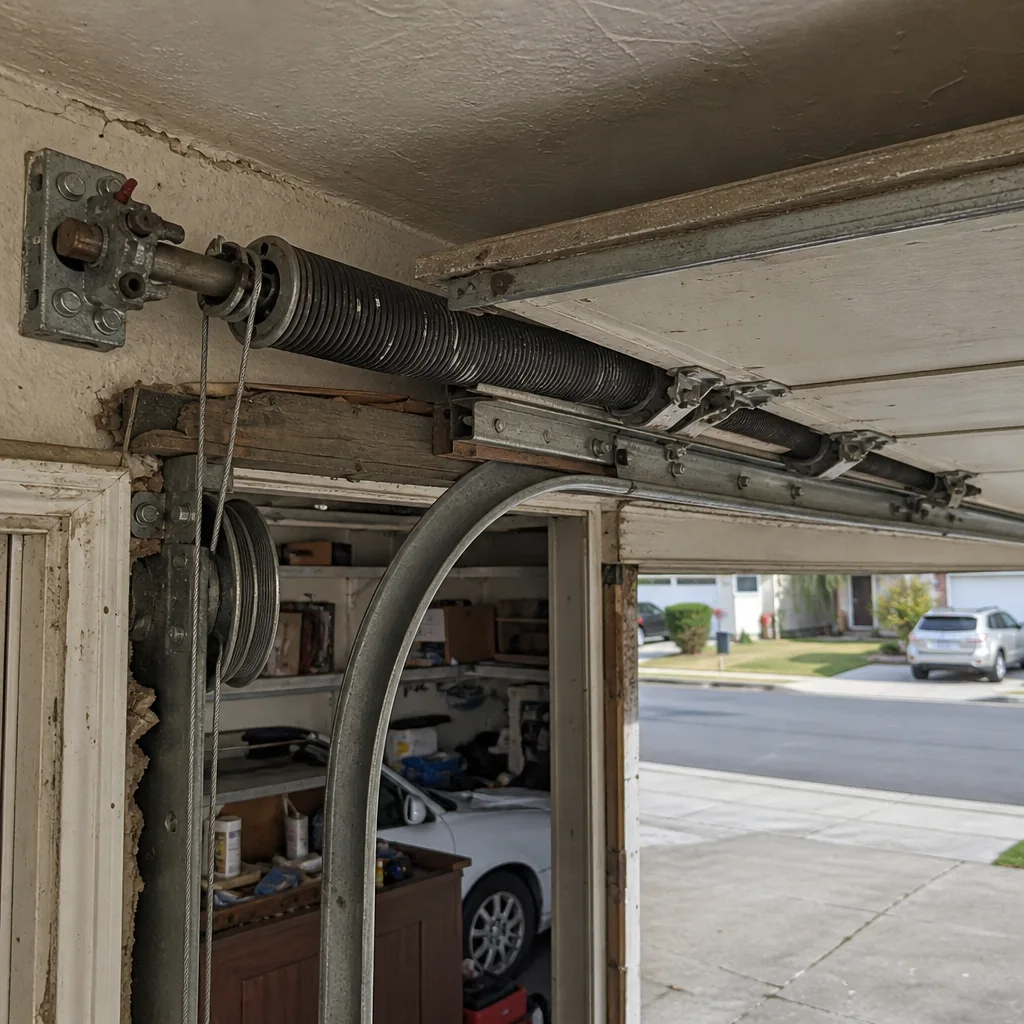
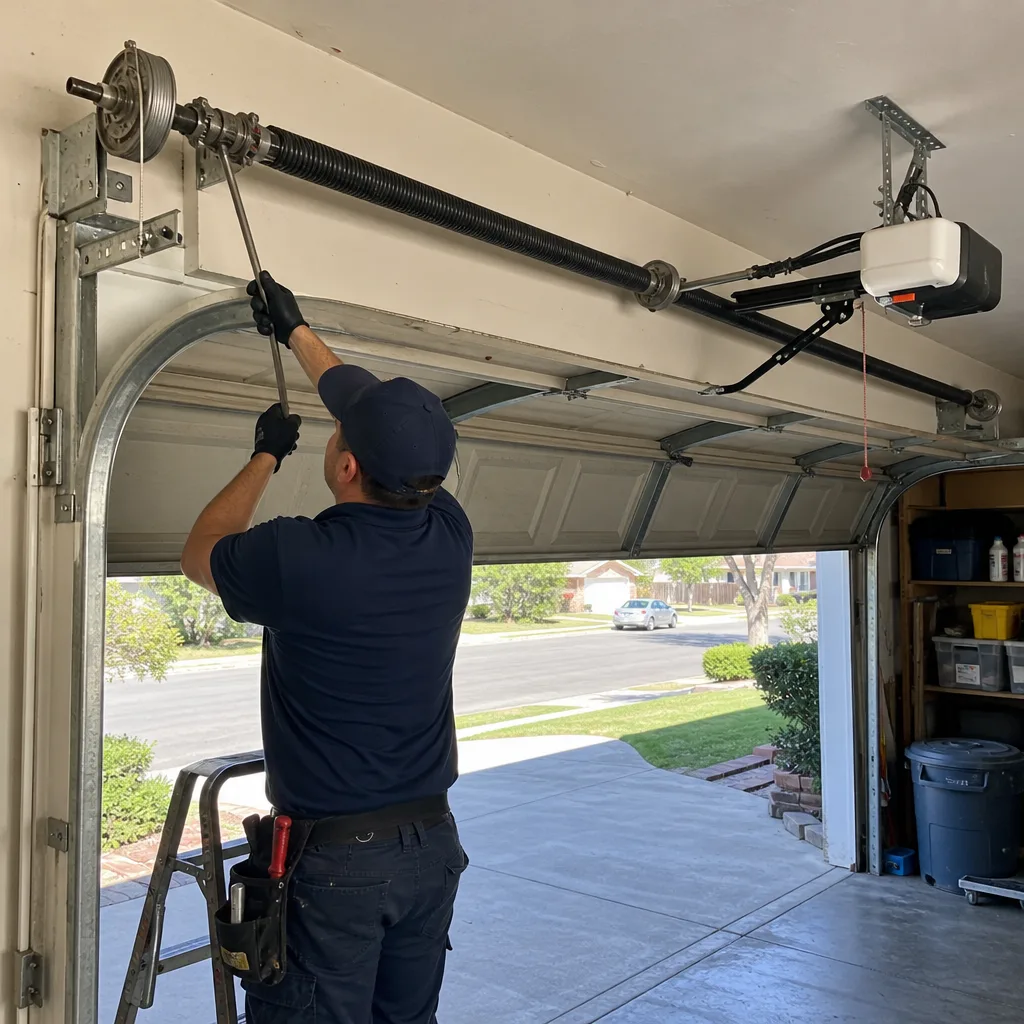
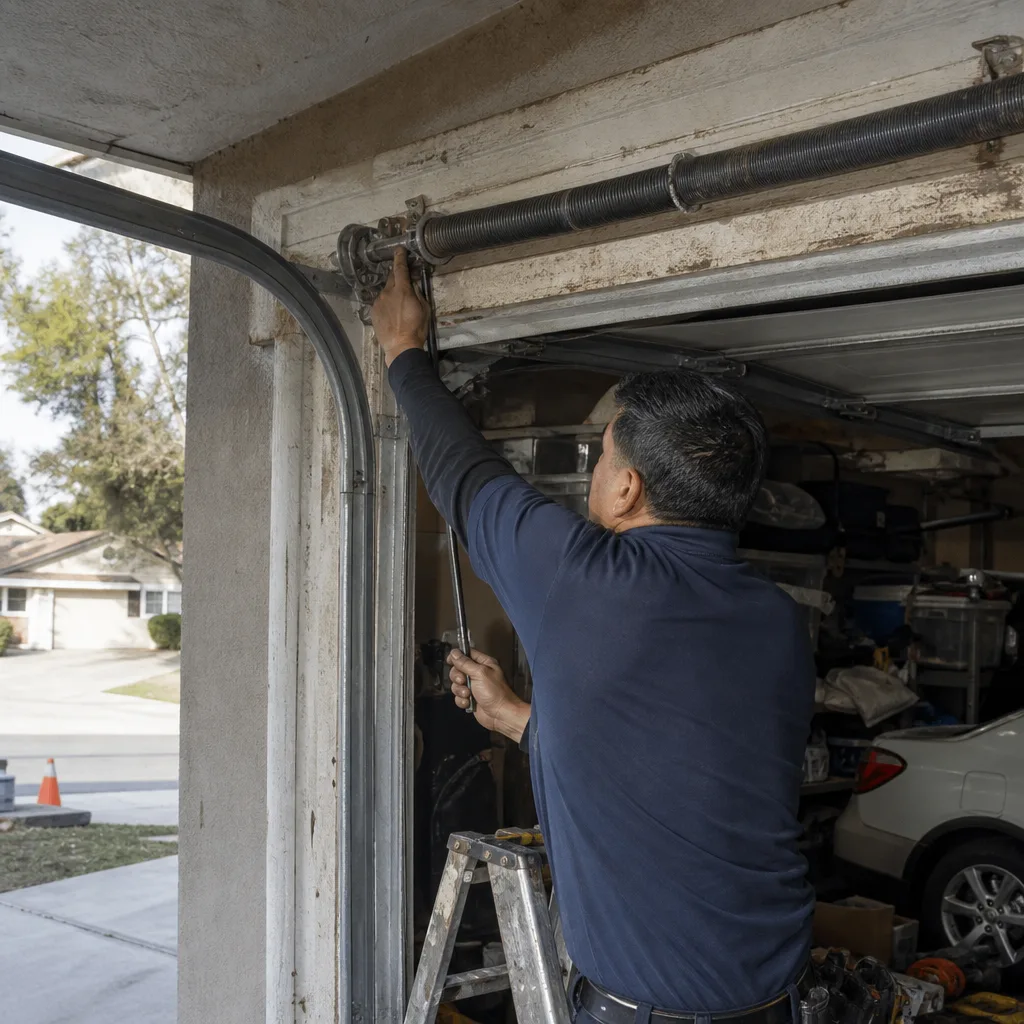
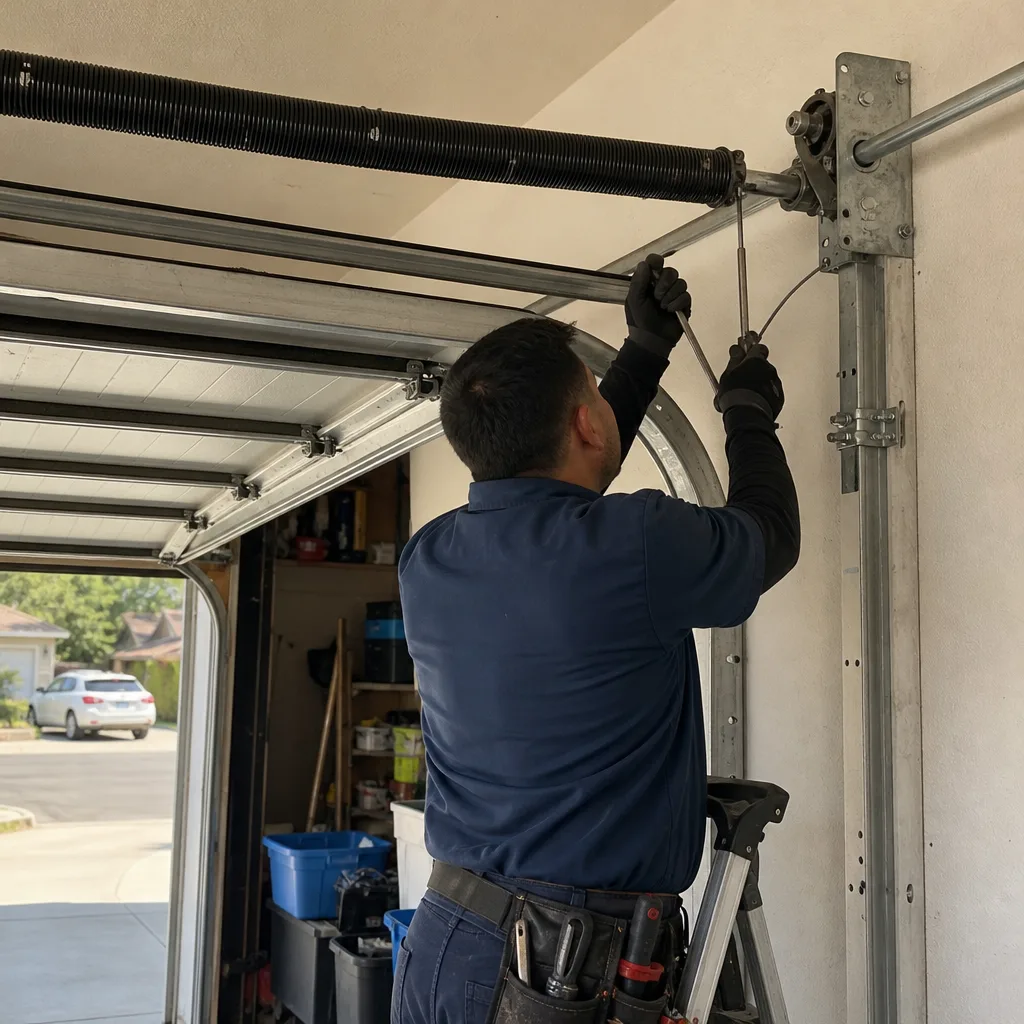
Spring replacement is the most important item on this list. Torsion springs are rated for a certain number of cycles, typically 10,000 to 20,000 depending on the grade, and Riverside’s heat accelerates metal fatigue compared to cooler climates. If you know your springs are more than seven or eight years old, or if you’ve noticed the door feeling heavier or the springs showing visible gaps in the coils, spring is the time to replace them. It’s also the only safe time to do it yourself if you have the training; torsion springs are under hundreds of pounds of tension, and one wrong move with a winding bar can cause a serious injury. We always recommend a professional for that job, but if you’re going to attempt it, do it in April, not July, and follow the manufacturer’s instructions exactly.
Track lubrication is also a spring task. The goal is to apply a clean, silicone-based garage door lubricant to the track channels, hinges, and rollers, and to wipe off any excess before the heat bakes it into a sticky gum. If you lubricate in summer, the oil thins out and drips onto the door face and floor. If you lubricate in winter, the cold makes it gummy and it collects Santa Ana dust like a magnet. April and May are the sweet spot.
If you have a steel door and you’re thinking about repainting, spring is the only window that makes sense in Riverside. You need a stretch of two to three days with temperatures between 60°F and 85°F and low wind. That’s April, and that’s about it. Paint applied in summer dries too fast and leaves visible brush marks and poor adhesion. Amarr, Wayne Dalton, and Raynor all publish specific repainting guidelines for their steel door lines, and almost all of them assume a mild climate window. Riverside gives you about six good weeks per year for that project.
The Riverside Seasonal Task Card: What to Check and When
Here’s a printable task card. We’ve kept it to specific checks, not vague categories, and arranged it by the four Riverside stress periods. Print this and tape it inside the garage door jamb or on the wall next to the opener button. Each season’s checks take about 15 minutes.
Summer (June-September)
- Look for light under the closed door at late afternoon. If you see any, measure the gap with a piece of cardboard. Anything over 1/8 inch means the bottom seal is on its way out.
- Inspect the bottom seal for cracking, flattening, or a “wavy” edge. Replace if cracked or if it no longer springs back when pressed.
- On a hot afternoon, cycle the door three times. If it stops mid-cycle and won’t respond for several minutes, that’s likely thermal shutoff, not a dead motor.
- Check the garage temperature at the ceiling with a basic thermometer on a hot afternoon. If it’s over 120°F and your opener is thermal-shutting off, consider garage ventilation improvements.
Santa Ana Season (October-December)
- During or after the first Santa Ana event, wipe both photo-eye sensor lenses with a dry microfiber cloth. Check that both indicator lights are lit and steady.
- Listen for grinding or chattering when the door operates. That’s grit in the track or roller bearings.
- Inspect the top of the door panels for accumulated dust. Wipe it off before rain mixes with it to form a slurry that drips into the track channels.
- Check for rattles in the hinges and brackets. Wind vibration loosens hardware the same way it loosens fence boards.
Rainy Season (January-March)
- After each significant rain, check the inside of the garage floor for water marks. Mark any wet spots with chalk to track whether they repeat.
- Inspect the bottom bracket ends for rust. Surface rust is normal; flaking rust is a replacement signal.
- Run the door and watch the bottom seal contact the floor on both sides. If one side touches before the other, the slab or the seal has shifted.
- After a dry spell, wipe down the track channels to remove sediment residue left by evaporated rain runoff.
Spring (April-May)
- Check torsion spring condition: look for gaps between coils, rust, or visible stretching. If springs are 7+ years old, get them inspected.
- Lubricate track channels, hinges, and rollers with a silicone-based garage door lubricant. Wipe off excess.
- Repaint steel doors if needed, using a mild day with low wind. Follow the door manufacturer’s repainting specs.
- Schedule any opener repair or replacement work before the summer heat arrives.
Common Mistakes to Avoid
- Lubricating in summer. Oil and heat don’t mix well on a garage door. Summer-applied lubricant thins out, drips, and collects dust from the Santa Ana winds a few months later. Do it in April, not July.
- Ignoring a visible gap under the door. A bottom seal gap is never just cosmetic in Riverside. It changes the load distribution on the door, accelerates hinge wear, and invites water in during the rainy window. A $40 seal fix now prevents a larger repair later.
- Assuming a non-responsive opener in July means a dead motor. Thermal shutoff is common in Riverside’s hot afternoons and usually resolves on its own. If it happens repeatedly, get it diagnosed before the motor windings actually do fail.
- Replacing springs in the middle of summer. Heat accelerates metal fatigue, and installing a spring in a 110-degree garage is physically miserable work that increases the risk of error. Do it in March or April.
- Not wiping photo-eye sensors after a Santa Ana event. Dust-charged sensor lenses are the most common cause of doors that refuse to close in Riverside between October and December. The fix is a 30-second wipe, not an opener replacement.
- Trying to repaint a steel door in June. Paint applied in Riverside’s summer heat dries unevenly, shows brush marks, and peels within two years. Amarr and Wayne Dalton both recommend mild temperatures for their steel door paint systems. April is the window.
- Waiting until the door fails to call a professional. Most of the components on a garage door fail gradually. The signs show up months before the breakdown. If you’re seeing multiple signs on this task card, get an inspection before the failure happens during a heat wave or a rainstorm.
When to Call a Professional
Some tasks on this list are safely DIY: wiping sensor lenses, checking for light under the door, listening for unusual sounds. Others are not. Torsion spring replacement should always be done by a trained technician with the right winding bars and experience, because the spring holds enough tension to cause a serious injury if it releases unexpectedly. Bottom bracket replacement, cable work, and any opener repair that involves opening the motor housing should also be handled professionally. If your door has shifted off its tracks or you see a cable that’s frayed or loose, don’t operate the door at all until a technician has looked at it. Honest Garage Door Service offers free estimates in Riverside, and we diagnose the problem before we quote it. Call (833) 620-3811 and we’ll tell you what’s wrong, what it takes to fix it, and what it costs, before any work begins. For more guides & resources on keeping your door running smoothly, visit our blog.
Frequently Asked Questions
Seasonally, not yearly. Riverside’s four stress periods each require about 15 minutes of specific checks: heat-related seal and opener issues in summer, sensor and track cleaning during Santa Ana season, water and bracket inspection during the rainy window, and the bigger maintenance items in spring. Homeowners who do these four checks every year can expect 15-20 years from a quality door, while those who skip them typically see seal failures within 3-4 years and spring failures around year 8-10.
A bottom seal replacement on a standard residential door in Riverside typically runs $85-$150 installed, depending on the door width and seal type. The part itself is $30-$60 for most Clopay, Amarr, or Wayne Dalton doors. If you wait until water damage has reached the bottom bracket, the total repair can run $250-$450 because the bracket and cable attachments need to be replaced as well. Call (833) 620-3811 for an exact quote, because every door is sized differently.
A garage door opener that stops responding on hot afternoons and starts working again after the garage cools down is experiencing thermal shutoff, which is a built-in protection circuit that cuts power when the motor gets too hot. It’s common in Riverside garages that reach 120°F or more at the ceiling during summer. One or two thermal shutoffs per summer are usually harmless, but if it’s happening repeatedly, the repeated heat cycling is shortening the life of the motor and it’s worth having a technician check the unit. Call (833) 620-3811 for a free assessment.
April is the best month to replace a garage door spring in Riverside. The temperature is mild, which means the metal isn’t heat-expanded and the installation can be done precisely. Spring replacement in summer is physically harder on the technician and the spring metal, and any warranty-related adjustment work is easier to schedule quickly in the spring than during the summer rush. If you know your springs are aging, schedule the replacement for March or April rather than waiting for a failure in July.
Your garage door reverses during Santa Ana winds because fine dust from the dry Santa Ana River bed settles on the photo-eye sensor lenses and scatters the infrared beam, which makes the opener think something is blocking the doorway. The static-electric charge of Santa Ana dust makes it cling to the plastic lenses. Wipe both lenses with a dry microfiber cloth and check that both indicator lights are steady. If that doesn’t fix it, the sensors have likely shifted out of alignment and need a technician to realign them.
You can, but the results will be poor. Paint applied to steel doors in temperatures above 90°F dries too quickly, which causes visible brush marks, poor adhesion, and peeling within a year or two. Wayne Dalton, Amarr, and most other steel door manufacturers specify application temperatures between 60°F and 85°F with low wind, which in Riverside means April, early May, or sometimes late October. If you miss the spring window, wait for a stretch of mild fall weather rather than forcing it in June.
The Bottom Line
Riverside garage doors don’t face extreme cold or heavy snow, but they do face a combination of punishing UV exposure, fine wind-driven dust, and expanding clay soil that most maintenance guides don’t account for. The solution is a seasonal schedule built around those local conditions: seal and thermal-shutoff checks in summer, sensor and track cleaning during Santa Ana season, water and bracket inspection in the rainy window, and spring and lubrication work in April. Fifteen minutes per season catches most problems before they become breakdowns. And when something does need a professional, Garage Door Installation in Riverside or repair work from a company that tells you upfront what’s wrong and what it costs beats a surprise invoice. That’s the whole point of Honest Garage Door Service home and the reason our name is on the truck.
Written by the team at Honest Garage Door Service, serving Riverside since 2015.
See the difference
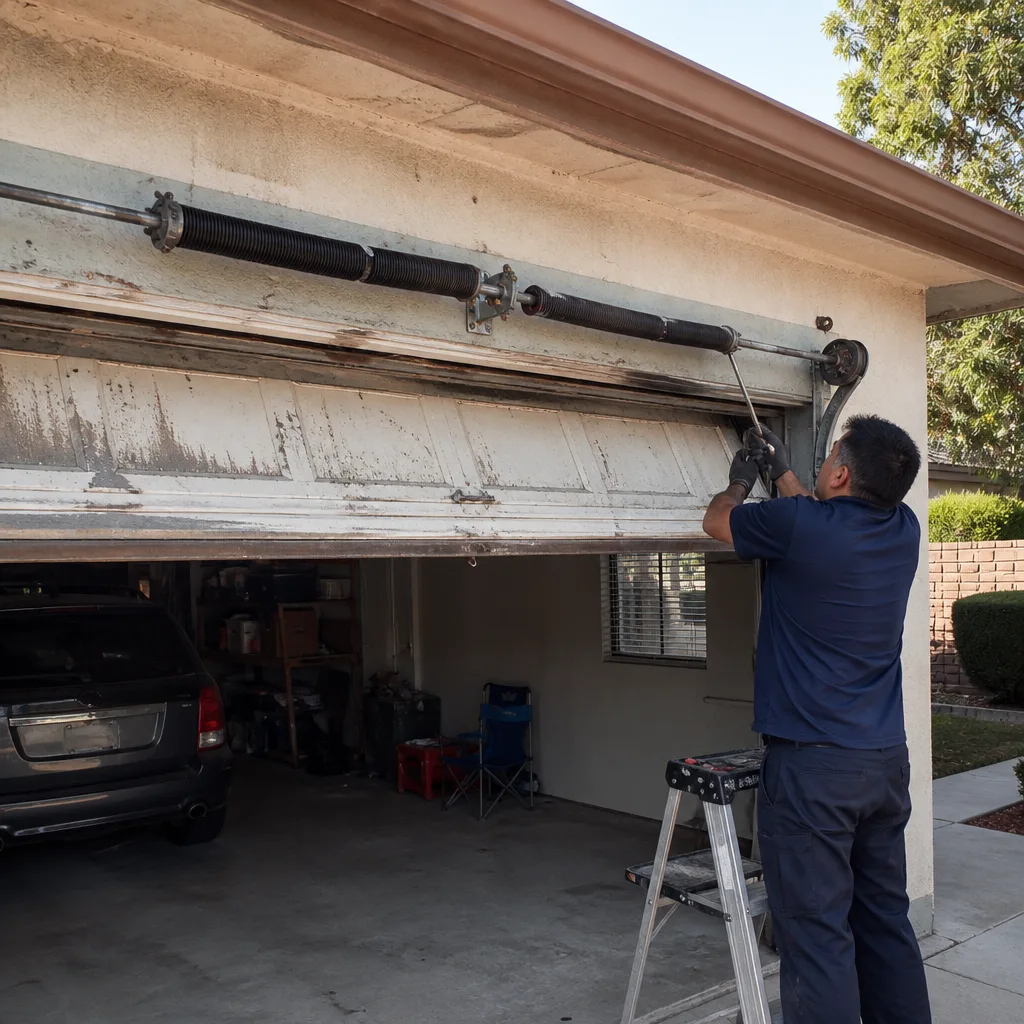 Before
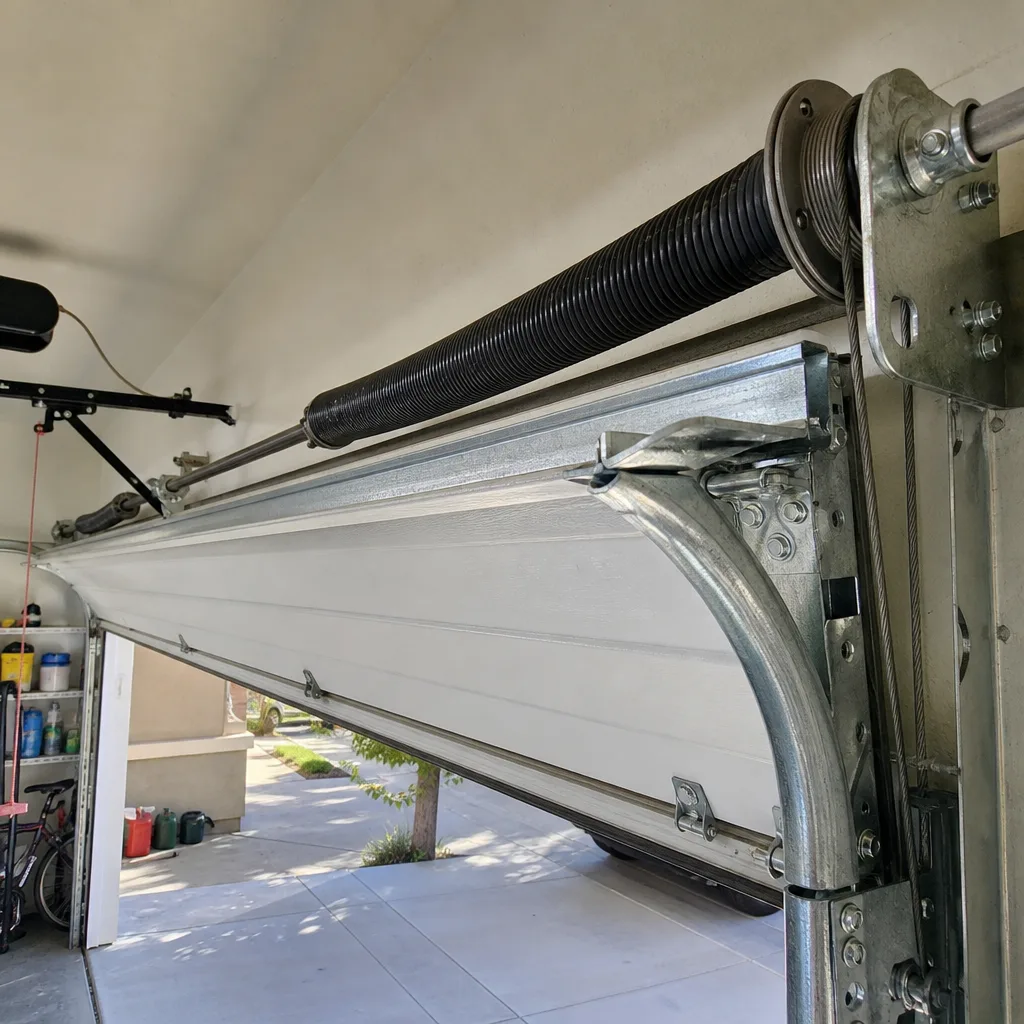 After
 Before
 After
 Before
 After