
Last updated October 30, 2026
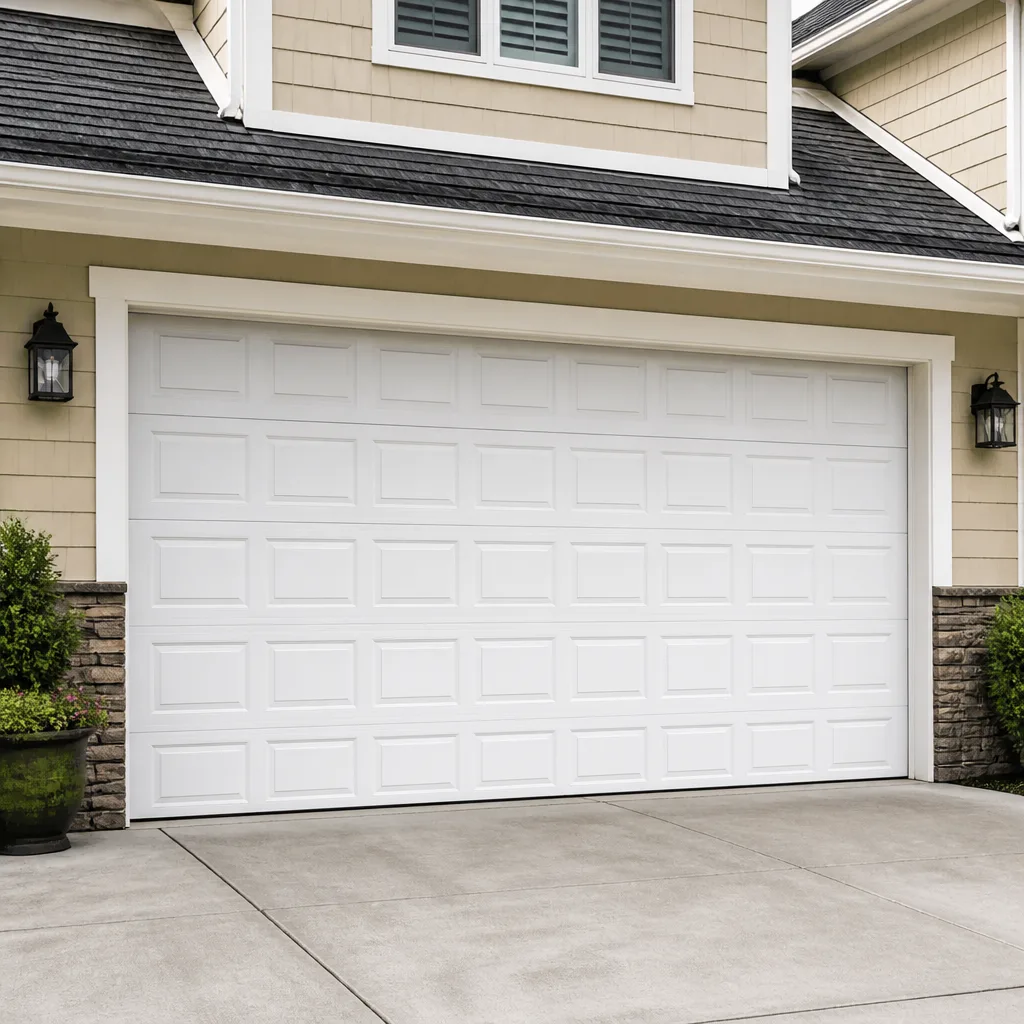 Raised-panel steel
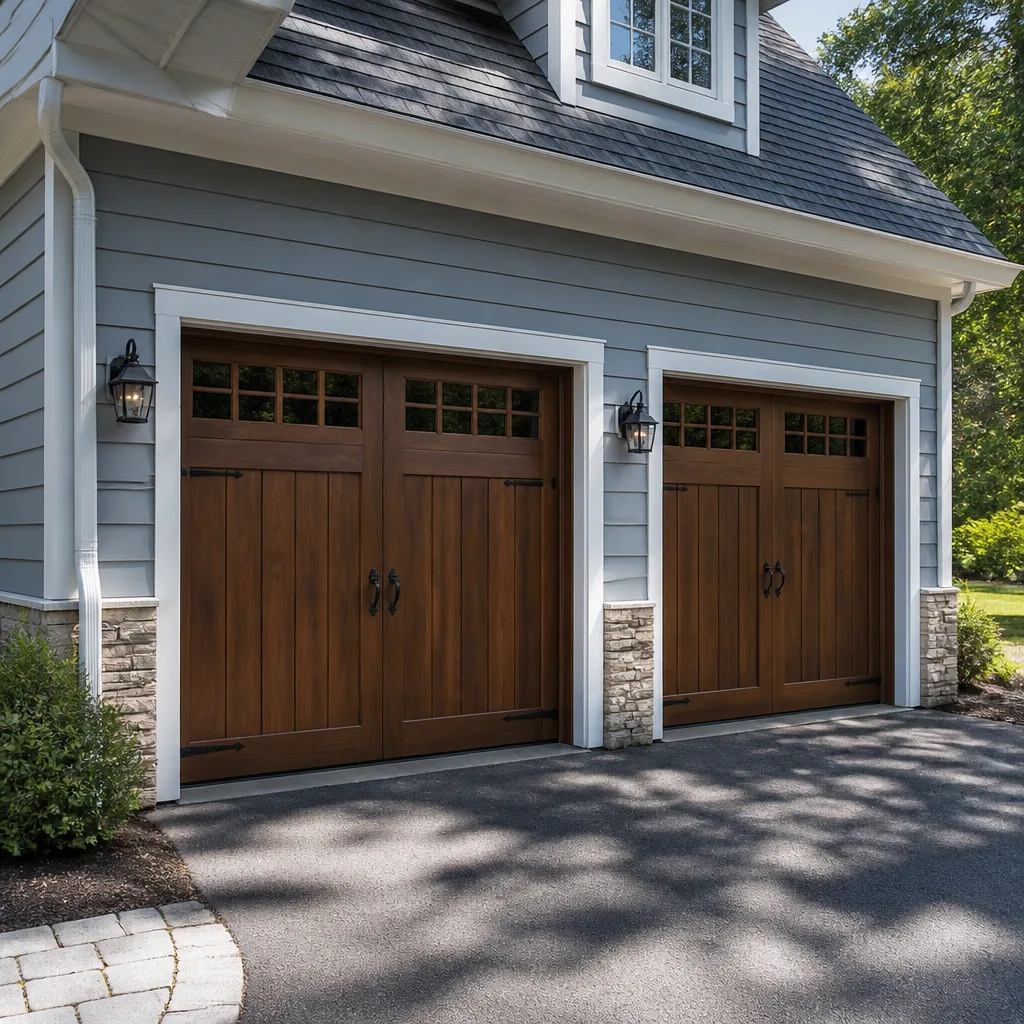 Carriage house
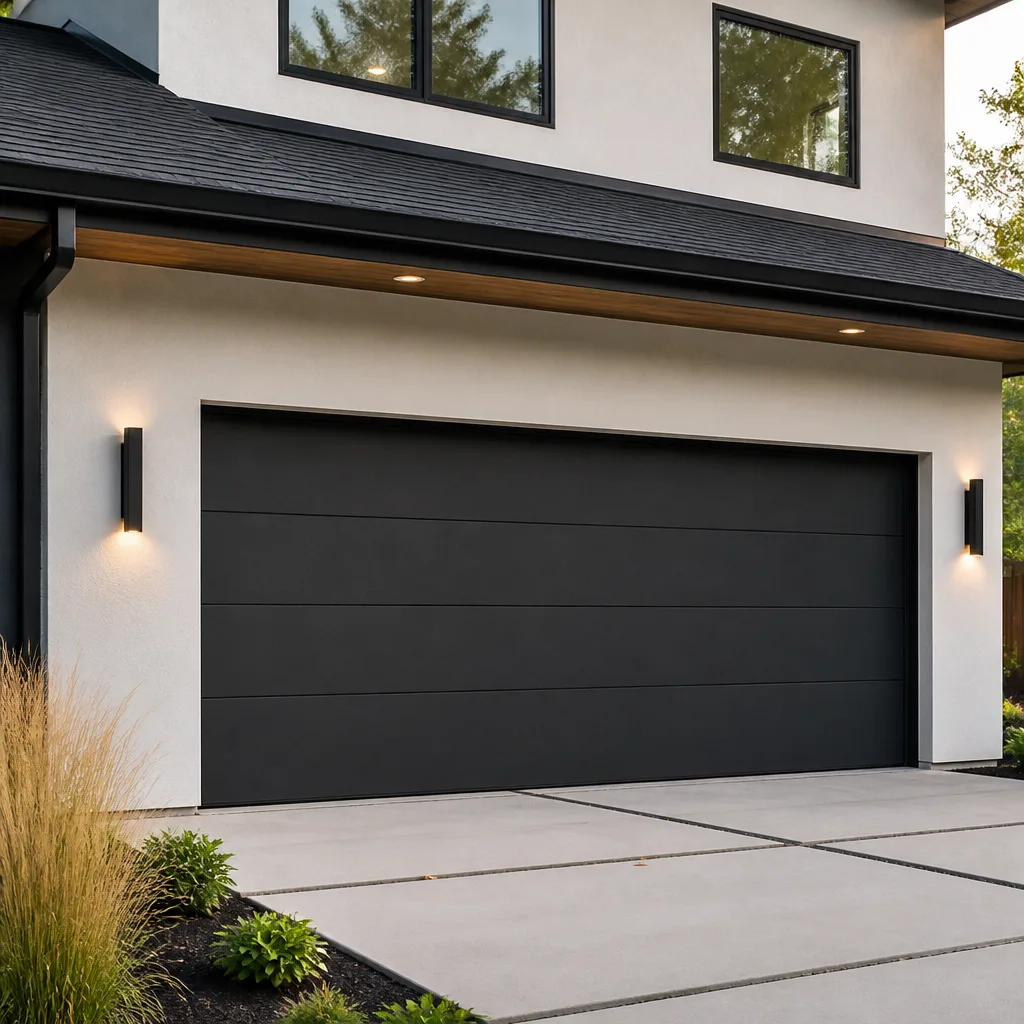 Modern flush
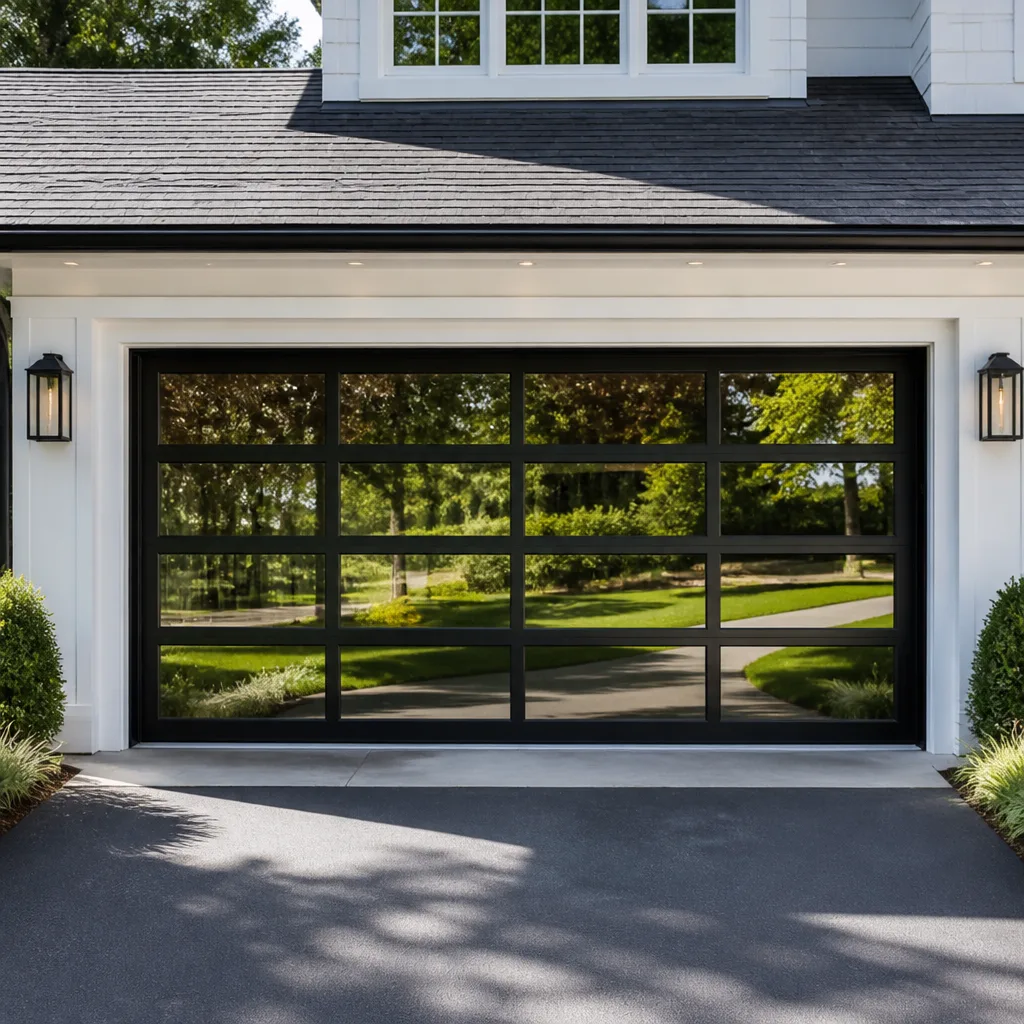 Full-view glass
 LiftMaster openers
 Chamberlain openers
Full 25-point door and opener safety check with every visit - springs, cables, rollers, tracks, and your LiftMaster or Chamberlain opener included
You get a price before we start. It does not change when the truck arrives.
Get your free estimateGarage Door Permits, Codes & Inspections in CA: What You Need to Know
Here’s a number that surprises most Riverside homeowners: roughly one in three garage door installations we inspect in the Inland Empire was done without a permit, and the owner had no idea anything was missing. The big-box store sold them the door. The installer hung it in a morning. Nobody mentioned a permit, an inspection, or Title 24. Then the house goes on the market and escrow asks the one question nobody can answer. This guide covers what actually triggers a permit in California, what Riverside Building & Safety enforces, which exemptions you can legitimately claim, what resale exposure looks like, and how to fix unpermitted work before it becomes a closing-table emergency. For related reading, see our Garage Door Warning Signs: A Riverside Homeowner’s Reference Guide.
Quick Answer
In California, a like-for-like garage door replacement (same size, same opening, no structural changes) generally does not require a building permit. A permit is required when you change the door size, modify the framing or header, install a new opener on a door without current safety features, or attach a garage door to conditioned living space where Title 24 energy rules apply. When in doubt, call Riverside Building & Safety at (833) 620-3811 and ask about your specific scope before work starts.
Styles & brands we work with
Table of Contents
- When a Garage Door Permit Is Required in California
- What Riverside Building & Safety Treats as Permit-Exempt
- Title 24 Energy Requirements for Garage Doors in California
- Seismic Bracing Code and Riverside’s Seismic Zone
- What Happens at Resale When Work Was Never Permitted
- Pulling Your Own Permit vs. Requiring Your Contractor to Pull It
- What the Riverside Inspection Process Actually Looks Like
- Common Mistakes to Avoid
When a Garage Door Permit Is Required in California
California Building Code (CBC) Section 105.2 lists work that is exempt from permits. A garage door replacement is not on the blanket exemption list unless it meets the narrow definition of “minor repair.” What triggers a permit comes down to three things: whether you’re changing the structure, whether you’re changing the size, and whether the opener installation interacts with safety or energy code. Here’s a specific breakdown of what Riverside inspectors look for when they review an application.
A permit is required when:
- You’re changing the rough opening size. Widening a single-door opening to fit a double door, or narrowing it, means cutting into framing, relocating support posts, and potentially re-engineering the load path above the door. That’s structural work. No exemption applies.
- You’re modifying the header or adding a beam. In many 1960s and 1970s Riverside homes, the existing header over the garage door is a 4×8 or 4×10 solid-sawn beam that was fine in 1968 but doesn’t meet current loading under CBC Chapter 23. If you’re touching it, even to sister a new member alongside it, the city wants plans and an inspection.
- You’re installing a motorized opener on a door that lacks current safety features. This is the one most homeowners miss. Under California law (SB 969, codified in Health and Safety Code), an automatic garage door opener may only be installed or replaced on a door that has a functioning auto-reverse system, photoelectric safety sensors, and a manual release. If the door is older and doesn’t have those features, the opener installation triggers a permit requirement because the door must be brought into compliance. An installer who skips this step is installing illegal equipment onto a non-compliant door.
- The garage is attached to conditioned living space. If your garage shares a wall or ceiling with heated and cooled living area in Riverside, California’s Title 24 energy code goes beyond what most people assume. We’ll get into the R-value specifics below, but the short version is that an attached garage door in a conditioned space application is treated as part of the building’s thermal envelope, and a permit is required when you install a door that doesn’t meet the prescribed insulation minimums.
- You’re adding a door where none existed before. Converting a carport to a garage, or cutting a new door into an existing wall, is always structural work and always requires a permit in Riverside. No gray area.
We’ve had Riverside homeowners tell us the store told them “nobody pulls permits for garage doors.” That’s true in the sense that plenty of people skip it. It’s also true that plenty of people sell their house two years later and spend $3,000 to $6,000 curing unpermitted work because the buyer’s lender flagged it. “Nobody pulls one” is not a defense when the title company asks for documentation.
What Riverside Building & Safety Treats as Permit-Exempt
Riverside Building & Safety follows the California Building Code with a few local administrative interpretations. A straight swap is exempt when all of these conditions are met. If even one of them is not met, you need to pull a permit.
A like-for-like replacement is typically permit-exempt when:
- The new door fits the existing rough opening with no modification to the framing, jamb, or header.
- The door is the same configuration (same number of panels, same track system, same operating type).
- No structural members are cut, notched, drilled, or moved.
- The opener being replaced is already on a compliant door with functional auto-reverse and photoelectric sensors, and the new opener is a direct swap using the same mounting points and electrical circuit.
- The door is not part of a conditioned-space energy envelope requirement (detached garage, or attached but uninsulated with no HVAC connection).
Here’s a Riverside-specific nuance that varies by inspector. In some cities, replacing a 7-foot-high door with an 8-foot-high door of the same width is treated as “like-for-like” because the opening height just uses the existing headroom space without touching the header. Riverside treats a height change as an alteration that triggers review, but some inspectors will clear it over the counter without full plan review if the opening is not being structurally modified. We’ve seen a homeowner in the Wood Streets neighborhood get a same-day over-the-counter approval for a 7-to-8-foot height conversion on a single-car detached garage because the header was already set at 8 feet and the original installer just ordered a shorter door. Other cities would have required a full submittal. The point isn’t that there’s a loophole; the point is that Riverside’s building staff tends to be pragmatic about scope. Call and ask. The number is (833) 620-3811.
Title 24 Energy Requirements for Garage Doors in California
California’s Title 24 energy standards apply to garage doors in one specific circumstance: when the garage is part of the conditioned thermal envelope of the house, or when the garage contains equipment that heats or cools the space. If your Riverside home has an attached garage that shares a wall with the living room, and the builder installed a supply vent into the garage (some 1990s and 2000s builds did), or if you’ve added a mini-split in the garage, the Title 24 rules apply.
The specific requirements under Title 24 Part 6:
- Garage doors serving conditioned space must have a minimum insulation value of R-4.0 for the door panel itself under most climate zones, with the Inland Empire falling under Climate Zone 10 or 14 depending on the side of Riverside you’re on. The actual requirement is typically met by a door rated R-6 or higher.
- The door must be listed and labeled with its R-value by the manufacturer. A garage door without a certified R-value doesn’t meet Title 24 for conditioned space, period.
- Weatherstripping and perimeter sealing are part of the energy compliance. A door that meets the panel R-value but leaks air around the jambs fails the effective energy requirement.
- If the door is non-insulated, single-layer steel or uninsulated wood, and the garage is conditioned, it is a code violation to install it. Many installers skip this because the door itself is $300 cheaper than the insulated version. The homeowner only finds out during a resale energy audit or when a title company requests compliance documentation.
An important local data point: the Inland Empire’s summer heat makes insulated garage doors a functional necessity even when code doesn’t require them. In Riverside’s Orangecrest and Canyon Crest neighborhoods, where temperatures regularly exceed 100°F in July and August, an uninsulated steel door turns the garage into a heat sink that bleeds into the house. The Title 24 requirement exists for energy reasons, but the homeowner experiences it as a comfort cost. A Clopay or Amarr insulated door at R-9 or higher keeps a Riverside garage meaningfully cooler without conditioning, and it’s a selling point on any listing. The energy code only sets the floor; it doesn’t tell you what the good decision looks like.
Seismic Bracing Code and Riverside’s Seismic Zone
Riverside sits in a seismically active region. The San Andreas Fault runs roughly 20 miles north of downtown, the San Jacinto Fault system is closer, and the Elsinore Fault zone cuts through the general area. CBC Section 1613 requires seismic design for all new buildings and for alterations to existing buildings that meet certain thresholds. So how does this apply to a garage door?
The garage door itself is not a structural seismic element. The door is the weak point in the wall by design; it swings up or rolls up, and in an earthquake it’s expected to move. What the seismic code governs is the header and the shear wall above and beside the opening. In Riverside, garage door headers are typically designed for gravity loads (the weight of the roof above) plus seismic lateral loads. When you widen a garage door opening, you’re increasing the unsupported span of the header and reducing the length of shear wall on either side. CBC Section 1613 requires that any alteration that increases the header span or reduces shear wall area be designed and reviewed for seismic force, not just gravity. A contractor who says “a bigger header will handle it” without an engineer’s calc and a city review is guessing, and Riverside’s plan-checkers will reject it.
Here’s the practical scenario we’ve seen in older Riverside neighborhoods like Magnolia Center and Arlington. A homeowner wants to convert two single doors into one double door. The existing header is a 4×10 over each opening with a center post. The new opening removes that post, doubling the span. Gravity loads might be satisfied with a bigger beam, but the lateral shear loads on the now-longer wall sections are the governing factor. The city will require shear wall upgrades, anchor bolt verification, and possibly a hold-down at the corners. That’s an engineered scope with plans, not a swap. It’s also a $2,000 to $5,000 addition to the project that no big-box installer quotes up front.
What Happens at Resale When Work Was Never Permitted
This is the section that costs people money. Here’s the sequence that plays out in Riverside and throughout California when unpermitted garage door work is discovered during escrow.
The typical sequence:
- Disclosure. The seller’s Transfer Disclosure Statement asks whether any work was done without a permit. A seller who knows the garage door was swapped without a permit and doesn’t disclose it has committed fraud. A seller who doesn’t know is still liable for the condition of the property.
- Buyer’s inspection. A sharp home inspector notes that the garage door installation appears newer than the permit record. Many inspectors in California are trained to compare finish dates against building department records. No matching permit on file triggers a request for documentation.
- Lender review. If the buyer is financing, the lender’s appraiser or underwriter may flag the unpermitted work. FHA and VA loans are particularly strict. Conventional lenders often defer to the appraiser, but in a market where Riverside appraisers are being asked to verify permitted improvements, it’s becoming more common.
- Title insurance. The title company runs a permit search as part of its standard work. Unpermitted work that affects the structure or safety systems is a defect that can delay settlement or create a policy exclusion.
- The cure. The seller is usually the one on the hook to legalize the work. That means submitting an “as-built” permit application to Riverside Building & Safety, paying penalties that can range from 1x to 5x the standard permit fee, opening up the work for inspection (which may require removing drywall or trim to expose the header or wiring), and completing whatever corrections the inspector requires. A door that was $1,800 to install can easily become a $5,000 cure.
What a retrofit permit costs in Riverside varies by the scope, but the penalty component alone typically adds $500 to $1,500 on top of the standard permit fee, and the inspection process requires the work to be exposed. This is why we tell every Riverside customer considering a permitted installation to just do it the right way the first time. The garage door installation in Riverside process, done correctly with the right paperwork, costs less than a cure after the fact.
Pulling Your Own Permit vs. Requiring Your Contractor to Pull It
In Riverside, a homeowner may legally pull their own permit for work on their own primary residence. A contractor must pull the permit in their name if they’re performing the work for compensation, unless the homeowner insists on pulling it themselves. Here’s the practical difference.
When the homeowner pulls the permit:
- The homeowner is the responsible party of record. The permit is in their name, the inspection results are attached to their name, and any code violations or corrections are their legal responsibility.
- Liability shift: if something goes wrong with the installation and an injury results, the homeowner’s name is on the permit as the responsible party. Their homeowner’s insurance is the first line of financial defense.
- The contractor’s leverage is reduced. A contractor working under a homeowner-pulled permit may feel less accountable for code compliance because the city’s enforcement flow goes through the homeowner.
When the contractor pulls the permit:
- The contractor’s license number is on the permit. That’s permanent, searchable documentation that they performed the work and certified it met code. If it doesn’t meet code, the contractor is on record for it.
- California Contractors State License Board (CSLB) jurisdiction applies. Unlicensed or improperly permitted work performed by a licensed contractor is a CSLB complaint matter, which gives the homeowner a regulatory remedy beyond civil court.
- The contractor’s bond and insurance are exposed. If the work is defective or the permit process reveals pre-existing issues that the contractor should have caught, the homeowner has a claim path.
The answer isn’t that one is always better. For a simple like-for-like swap, a homeowner permit is fine if you understand the inspection process. For structural work, seismic upgrades, or Title 24 compliance, a contractor-pulled permit is the safer protection. And a contractor who refuses to pull a permit when one is required, or who suggests you skip it “to save money,” is telling you something important about how they operate.
What the Riverside Inspection Process Actually Looks Like
If you do pull a permit for a garage door project in Riverside, here’s the sequence you’ll go through. It’s not complicated, but it does require scheduling and being present for the inspection. For a seasonal maintenance overview that can prevent permit-triggering problems, check our Garage Door Repair Maintenance Checklist for Riverside Homeowners.
Step 1: Determine the permit type. Over-the-counter permits are available for simple replacement scopes where no structural or energy code review is required. If your project involves structural work, energy compliance, or seismic design, expect plan review, which in Riverside currently runs 10 to 15 business days for typical residential scopes.
Step 2: Submit the application. You’ll need a site plan, a description of the work, and for structural scopes, engineering calculations. Riverside accepts applications in person at the counter on Main Street or online through the city’s permit portal.
Step 3: Pay the permit fee. Fees are calculated on the valuation of the work. A straightforward door replacement with permit typically runs $150 to $400 in permit fees in Riverside. Structural work with plan review starts at $600 and goes up from there.
Step 4: Complete the work. The contractor installs the door, opener, or structural modifications per the approved scope. All work must match the permit description. Scope changes require a permit revision.
Step 5: Schedule the inspection. Call or use the online portal. Riverside inspection windows are typically same-day scheduling if you call before 7:00 a.m., with a 4-hour arrival window.
Step 6: The inspection itself. The inspector verifies the work matches the permit, checks safety features on the opener (auto-reverse, sensor placement), verifies structural connections and hardware, and confirms energy compliance if applicable. Most garage door inspections take 15 to 30 minutes.
Step 7: Corrections or sign-off. If corrections are required, the inspector lists them, you fix them, and you call for a re-inspection. If it passes, the permit is closed and the record is permanent. This is the documentation you want in your file when you sell.
We’ve never had an issue with a Riverside inspector on a straight door swap. The inspectors in this city know their code, they’re reasonable, and they mostly want to see the work done properly. The problems arise when the work was done without a permit and the retroactive inspection reveals it was done wrong. That’s a much harder conversation.
Common Mistakes to Avoid
- Assuming the big-box store handles permits. The store sells you the door. The installation is farmed to a third party. Neither one is automatically pulling a permit, and the store’s paperwork won’t protect you if it’s not in the building department’s system. Ask specifically: “Who is pulling the permit, and in whose name?”
- Thinking “like-for-like” means “similar size.” Like-for-like in Riverside means the same rough opening, same framing, same operating type, no structural touches. A door that’s 6 inches wider or 6 inches taller is not like-for-like, no matter how close it looks.
- Skipping the Title 24 calculation when the garage is conditioned. If your garage has a heating or cooling source, or shares an insulated wall with the house, the door must meet R-value minimums. This is missed constantly because installers don’t ask and homeowners don’t know to check.
- Installing a new opener on an old door without checking safety compliance. This is a permit trigger and a safety issue. The auto-reverse and photo-sensor requirements are non-negotiable regardless of whether a permit is required.
- Widening a door opening without seismic review. This is the one that fails plan check most often in Riverside. The gravity load on the header is only half the story; the lateral shear load on the reduced wall length is what an inspector will check.
- Curing unpermitted work by hiding it. Replacing drywall over unpermitted header work, or painting over a modified door frame, doesn’t legalize anything. When it surfaces at resale, the cure is harder and more expensive than if you’d pulled the retroactive permit in the first place.
- Hiring an unlicensed installer to save money. In California, any job over $500 in labor and materials requires a licensed contractor. An unlicensed installer can’t pull a permit, can’t provide a legal contract, and leaves you with no CSLB or bond recourse. The savings vanish at the first problem.
See the difference
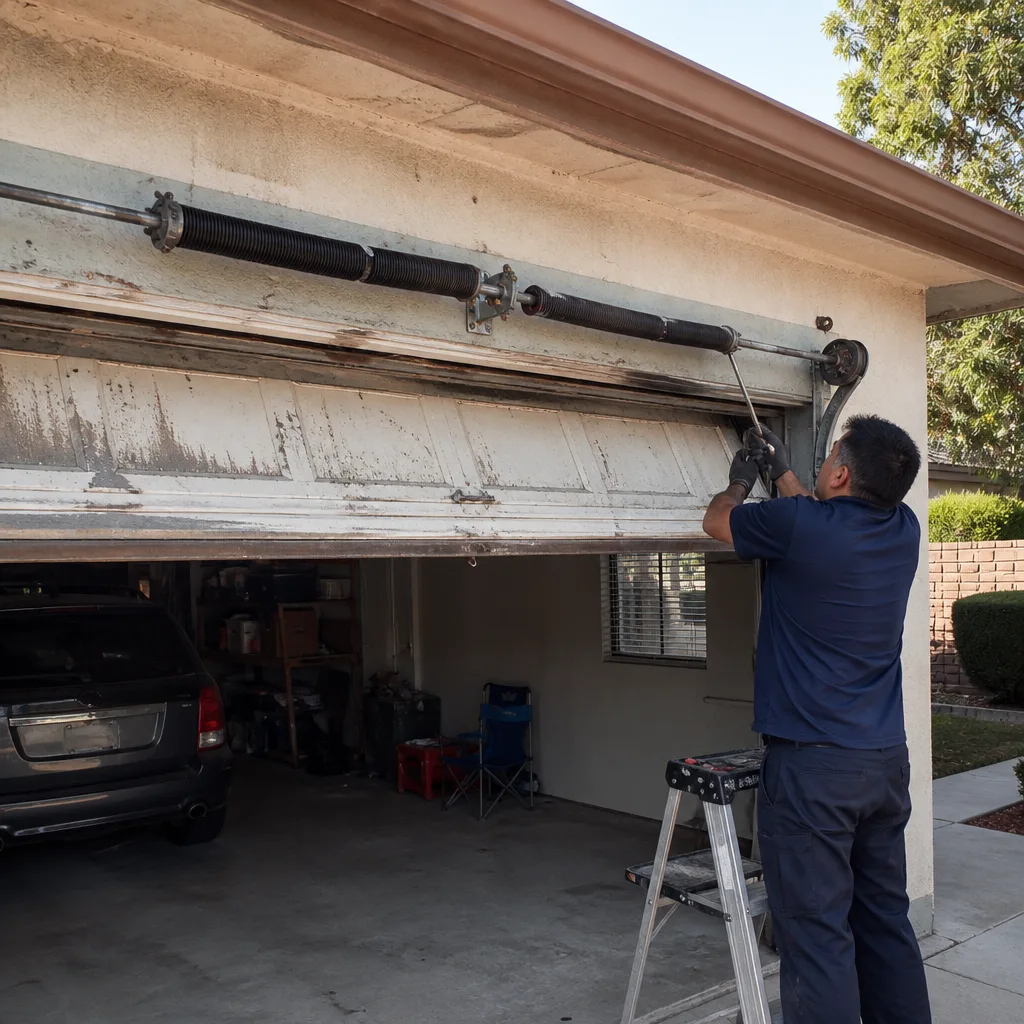 Before
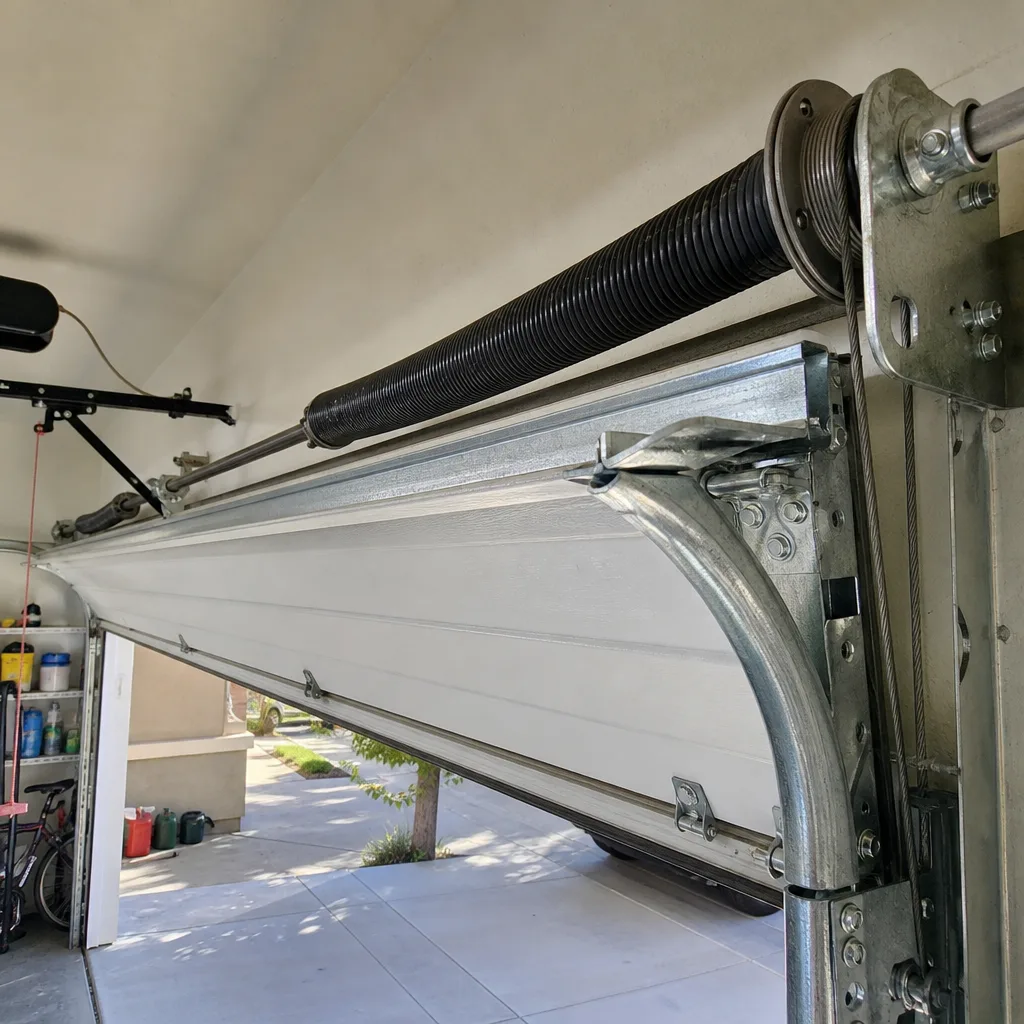 After
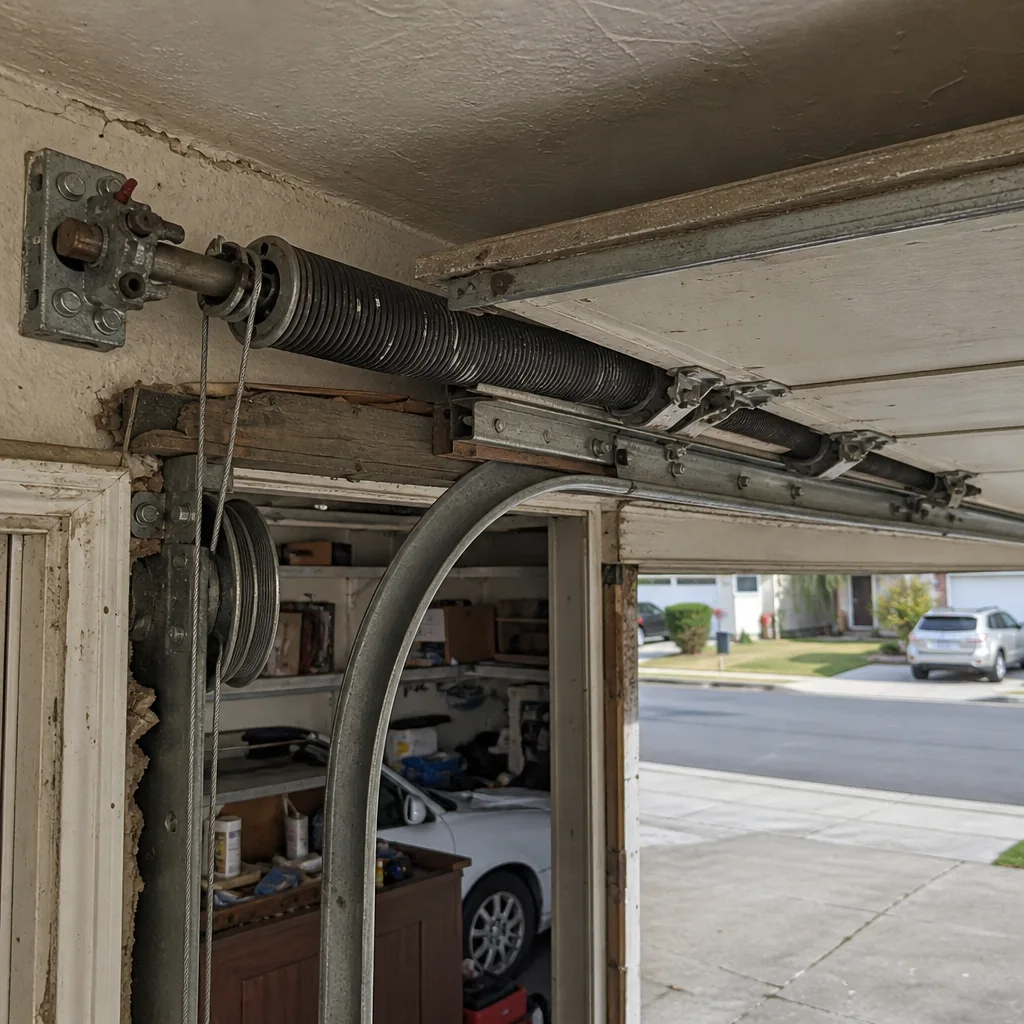 Before
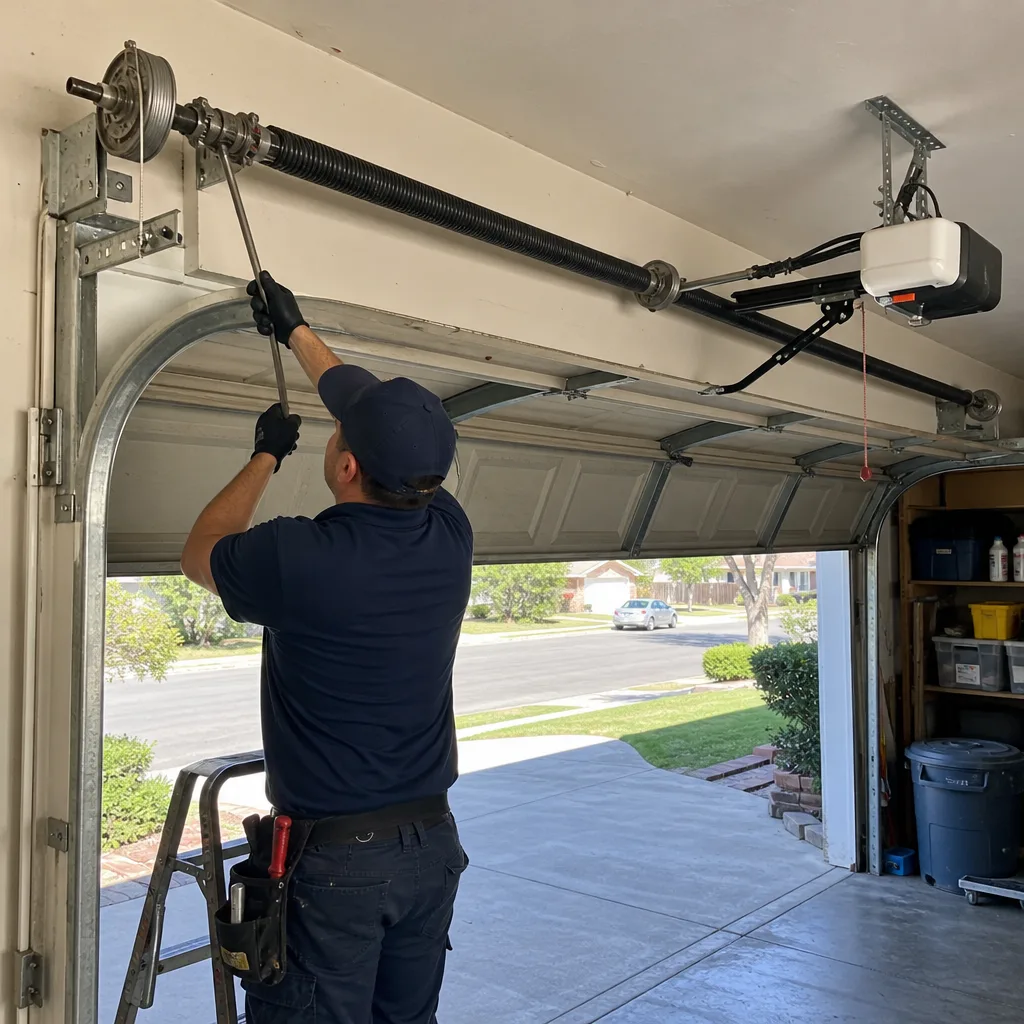 After
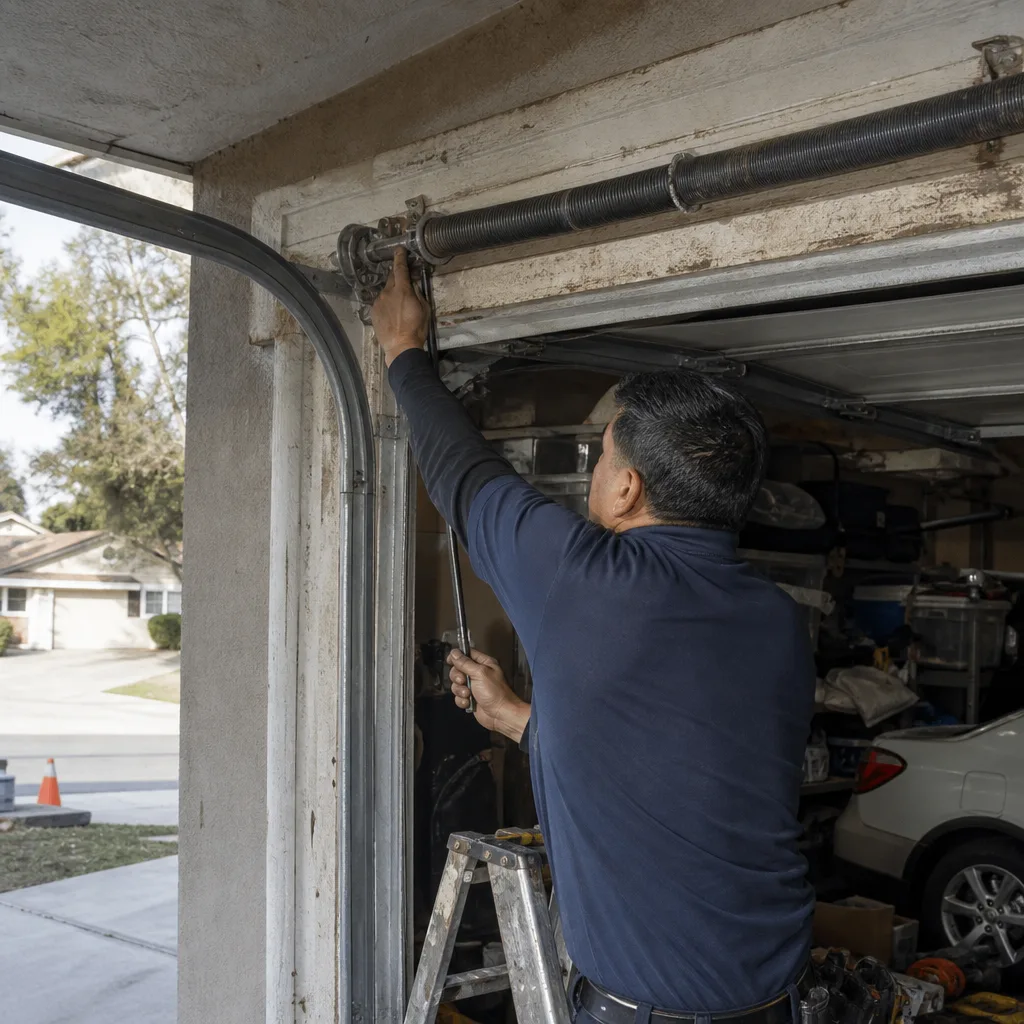 Before
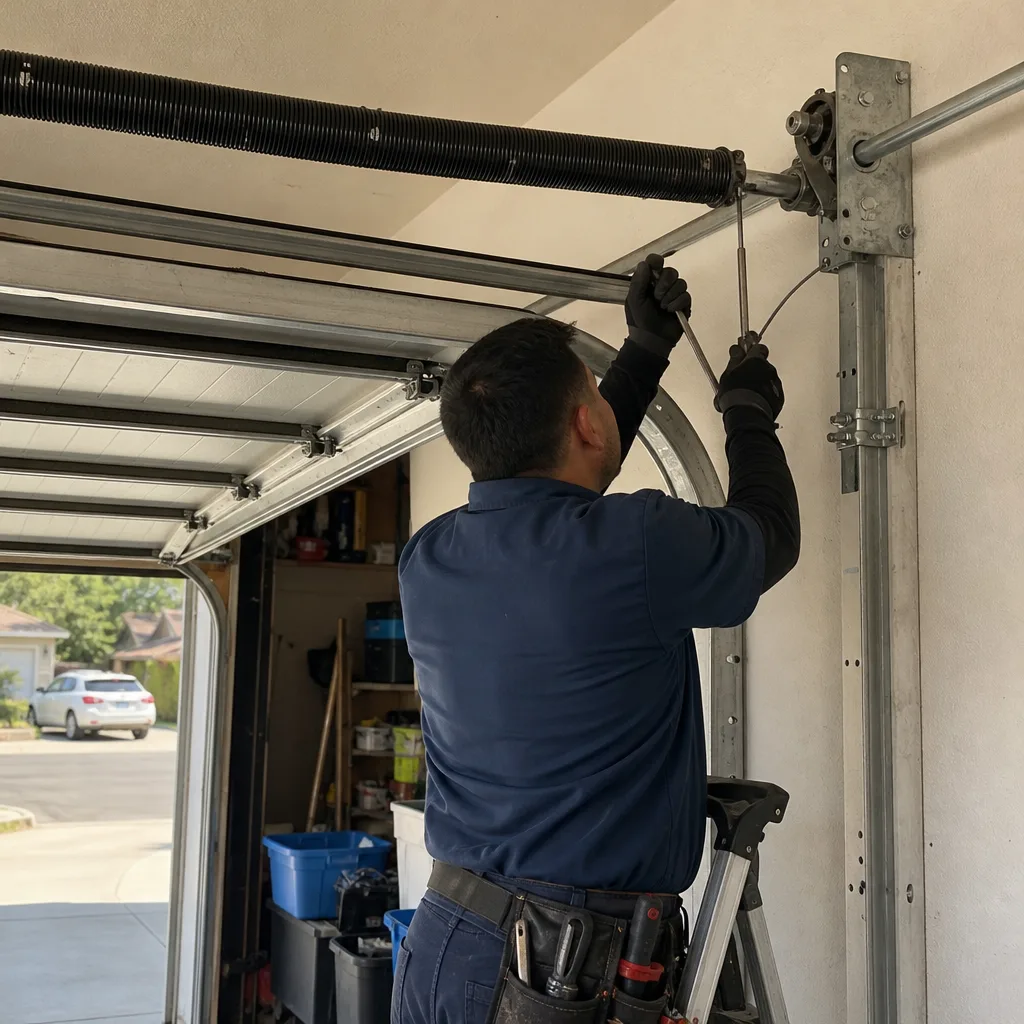 After
When to Call a Professional
If you’ve read this far and you’re not sure whether your specific garage door project requires a permit, call someone who has done this in Riverside before. The question takes 10 minutes to answer correctly and costs nothing to ask. Honest Garage Door Service has been handling permitted and permit-exempt garage door work in Riverside for years, and we tell you what the city requires before you spend a dollar. If the scope involves structural changes, seismic review, or Title 24 compliance, we’ll tell you that before you’re committed to anything. But even for a simple like-for-like garage door repair in Riverside, a conversation about what the job actually involves is the cheapest insurance you’ll ever buy. Call (833) 620-3811 and we’ll walk you through it. The estimate is free.
Frequently Asked Questions
No, not for a direct replacement that keeps the same door size, rough opening, and operating type with no structural or frame changes. A permit is required for size changes, structural modifications, opener installations on non-compliant doors, and doors serving conditioned living space. Call Riverside Building & Safety at (833) 620-3811 to confirm your scope.
A basic over-the-counter permit for a straightforward door replacement typically runs $150 to $400 in Riverside. Projects with structural scope and plan review start around $600 and go up based on valuation. Penalty fees for retroactive unpermitted work add $500 to $1,500 or more on top of the standard fee. Call (833) 620-3811 if you need help assessing what your project will require.
Yes, a Riverside homeowner can pull a permit in their own name for work on their primary residence. That puts the legal responsibility on the homeowner rather than the contractor. For structural work and Title 24 scopes, having the contractor pull the permit in their name provides stronger protection through CSLB jurisdiction and bond exposure.
California’s Title 24 requires a minimum R-value, generally R-4 or higher, for garage door panels when the garage is part of the conditioned thermal envelope. In practice, most compliant doors in Riverside are R-6 or R-9 insulated models. Uninsulated single-layer steel doors fail Title 24 for conditioned-space applications.
If the unpermitted work is discovered, the seller typically pays to legalize it. That means a retroactive permit, exposure of the work for inspection, penalty fees, and corrections. The total cost is often $3,000 to $6,000 when structural or safety corrections are required. Disclosure failure can also create fraud liability.
Not by itself, as long as the existing door already has functioning auto-reverse, photoelectric sensors, and a manual release. If the door doesn’t meet current safety standards, the opener installation triggers a permit requirement because the door must be brought into compliance at the same time.
The Bottom Line
California’s garage door permit rules are not complicated, but they are specific, and the specifics are exactly what gets skipped by installers who want the job done fast. Like-for-like replacement is generally permit-exempt. Size changes, framing work, opener installations on non-compliant doors, and conditioned-space energy applications all require permits, and all have enforcement teeth that show up at resale. Riverside Building & Safety is easy to work with if you ask before you build; it’s much less pleasant after the fact. When you’re ready to do the work, make sure you’re working with a company that names the permit question up front rather than hoping you never ask. Browse more guides & resources to stay informed on garage door best practices. The name on the truck is a promise, not a tagline.
Written by the team at Honest Garage Door Service, serving Riverside since 2015.